Opening one retail store requires careful planning. Rolling out multiple stores across different cities requires an organised system for controlling design, budgets, approvals, procurement, execution, quality, and opening dates.
A missing drawing, delayed approval, incomplete BOQ, unavailable material, or late fixture delivery can affect the entire rollout schedule. Without central coordination, brands may also face inconsistent finishes, cost variations, repeated mistakes, and different customer experiences across locations.
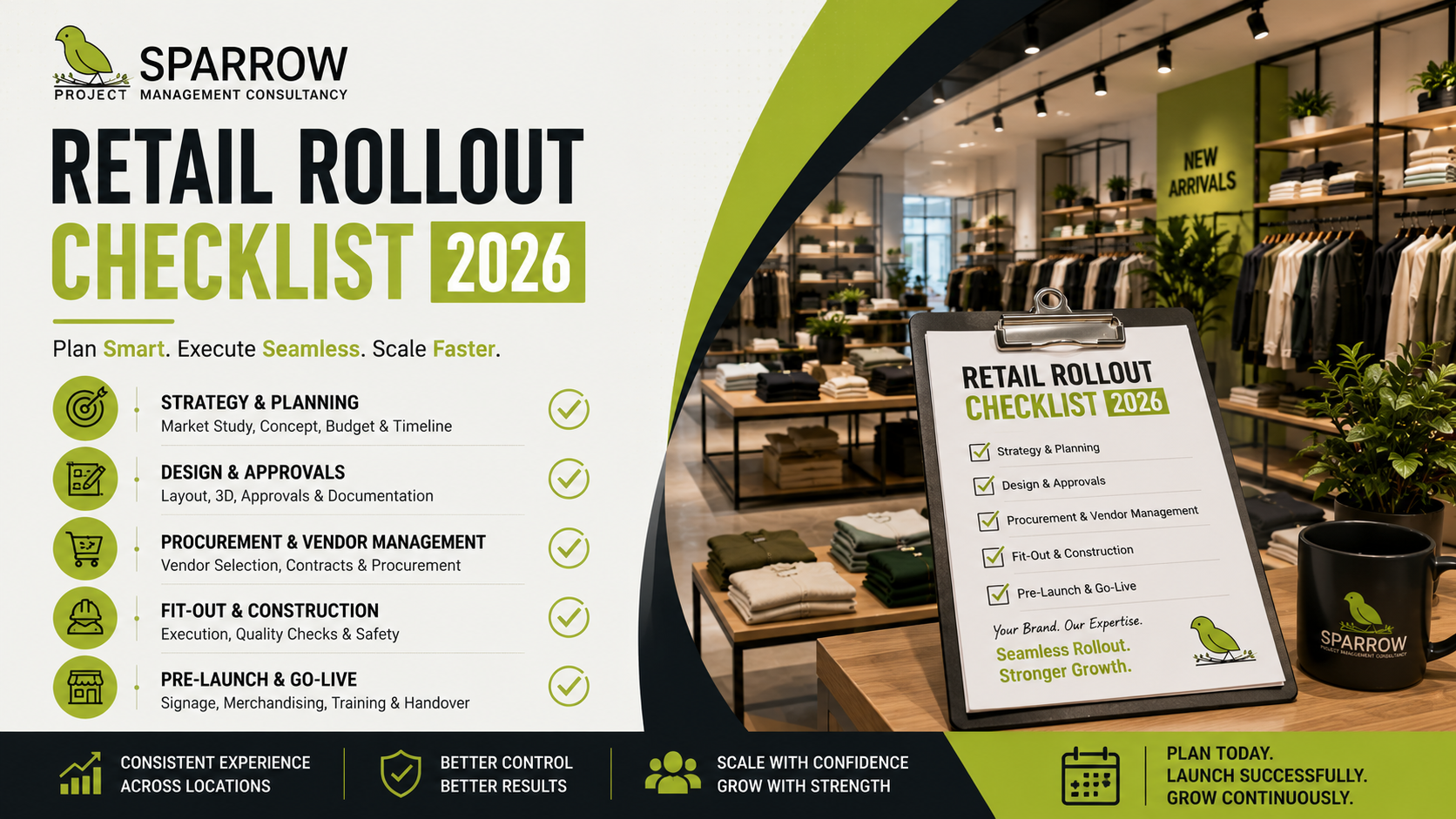
This Retail Rollout Checklist 2026 provides a practical framework for retail brands, franchise operators, project teams, developers, and business owners planning new store openings in India.
Quick Answer
A successful retail rollout requires every store to pass through eight controlled stages:
- Business and rollout planning
- Site assessment and possession
- Design development and approvals
- BOQ, budgeting, and vendor appointment
- Procurement and fixture production
- Site fit-out execution
- Quality inspection and handover
- Visual merchandising and opening readiness
Each activity should have a responsible owner, deadline, approval status, and supporting document.
Retail Rollout Checklist at a Glance
| Rollout Stage | Key Deliverable | Recommended Status |
|---|---|---|
| Programme planning | Store-wise rollout plan | Approved |
| Site assessment | Technical survey report | Completed |
| Design | Coordinated GFC drawings | Approved |
| Budgeting | BOQ and project budget | Frozen |
| Approvals | Landlord and statutory clearances | Received |
| Procurement | Material and fixture tracker | Active |
| Execution | Detailed site schedule | Active |
| Quality | Inspection and snag reports | Closed |
| Handover | Handover documents | Submitted |
| Opening | Launch-readiness approval | Confirmed |
1. Retail Rollout Planning Checklist
Before beginning work at individual locations, the brand should prepare an overall rollout strategy.
Business Planning
- Define the total number of stores planned
- Identify priority cities and markets
- Confirm proposed store formats and sizes
- Establish the rollout budget
- Set target possession and opening dates
- Define responsibilities between internal teams
- Confirm franchise and company-owned formats
- Identify decision-makers and approval authorities
- Prepare a store-wise rollout calendar
- Keep a reasonable opening-date buffer
Programme Management
- Create a master rollout schedule
- Develop store-wise milestone trackers
- Establish a standard reporting format
- Prepare a responsibility matrix
- Define escalation procedures
- Create a central document repository
- Establish change-control procedures
- Schedule weekly rollout reviews
- Prepare a central risk register
- Track dependencies between teams
The programme schedule should show which stores are under survey, design, approval, procurement, execution, snagging, and handover.
2. Site Selection and Assessment Checklist
A commercially attractive property may not always be technically suitable for the proposed store.
Commercial Site Review
- Confirm carpet and chargeable areas
- Review frontage and store visibility
- Check customer access and circulation
- Confirm loading and unloading arrangements
- Review operating-hour restrictions
- Check signage visibility
- Confirm parking availability
- Review landlord obligations
- Understand common-area maintenance conditions
- Check possession terms
Technical Site Survey
- Verify site dimensions
- Record existing site conditions
- Check floor levels and ceiling height
- Confirm electrical load availability
- Inspect the electrical panel and earthing
- Check HVAC provisions
- Review fire alarm and sprinkler systems
- Confirm plumbing and drainage points
- Check internet and data connectivity
- Identify structural restrictions
- Record material-movement routes
- Review debris-removal rules
- Check working-hour restrictions
- Photograph and document the complete site
A technical feasibility report should be completed before the lease is finalised wherever possible.
3. Design Checklist
Retail design must support customer experience, merchandising, operations, safety, and repeatability across locations.
Design Brief
- Confirm the store format
- Define the target customer experience
- Finalise product categories
- Confirm display capacity
- Plan customer circulation
- Define cash-counter requirements
- Confirm storage requirements
- Plan trial rooms where applicable
- Identify staff and back-office areas
- Confirm accessibility requirements
- Define technology and security needs
Required Drawings
- Site-measurement drawing
- Furniture layout
- Flooring layout
- Reflected ceiling plan
- Lighting layout
- Electrical drawing
- HVAC drawing
- Fire-safety coordination drawing
- Plumbing drawing
- Data and security layout
- Fixture details
- Cash-counter details
- Facade and signage drawings
- Branding and graphic details
- Material and finish schedule
Design Coordination
- Coordinate architectural and MEP drawings
- Check fixture positions against services
- Verify lighting for merchandise displays
- Confirm maintenance access
- Review fire-exit requirements
- Resolve drawing conflicts
- Complete prototype or mock-up approvals
- Issue controlled GFC drawings
- Record drawing revisions
- Freeze the design before execution
GFC means Good for Construction. Work should begin only after the relevant drawings have been reviewed and formally approved.
4. Budget and BOQ Checklist
The rollout budget should be based on measurable scope rather than a general per-square-foot assumption.
Budget Planning
- Establish the approved store budget
- Separate fit-out and non-fit-out costs
- Include design and PMC fees
- Include landlord and approval charges
- Include fixtures and furniture
- Include MEP services
- Include signage and branding
- Include IT and security systems
- Include logistics and storage
- Include testing and commissioning
- Include taxes where applicable
- Maintain a contingency provision
BOQ Review
- Confirm that quantities match drawings
- Define approved materials and brands
- Record measurement rules
- Mention inclusions and exclusions
- Include dismantling where required
- Include transportation and installation
- Check night-work or mall-related costs
- Include testing and documentation
- Separate provisional items
- Identify owner-supplied materials
- Prevent overlapping vendor scopes
Vendor Commercial Evaluation
- Issue the same BOQ to all bidders
- Compare quotations on equal scope
- Check missing and excluded items
- Review rates and quantities separately
- Assess vendor capacity and experience
- Check current workload
- Verify previous project performance
- Finalise payment terms
- Define retention and warranty
- Record delay and quality obligations
- Issue a formal work order
Selecting a vendor only on the lowest quotation can create additional claims later when the original scope is incomplete.
5. Approval Checklist
Approval requirements differ between malls, high-street properties, airports, commercial complexes, and standalone buildings.
Landlord or Mall Approvals
- Layout approval
- Architectural drawing approval
- Electrical approval
- HVAC approval
- Fire-safety approval
- Plumbing approval
- Facade approval
- Signage approval
- Material approval
- Structural approval where required
- Contractor registration
- Insurance submission
- Safety documentation
- Work permit
- Material-entry permission
- Night-work permission
Internal Brand Approvals
- Layout approval
- Design approval
- Material sample approval
- Fixture prototype approval
- BOQ approval
- Vendor approval
- Budget approval
- Signage approval
- Visual merchandising approval
- Opening-date approval
Every approval should be recorded with its submission date, reviewer, current status, comments, and closure date.
6. Procurement and Fixture Checklist
Late procurement is one of the most common causes of delayed store openings.
Procurement Planning
- Prepare a store-wise procurement schedule
- Identify long-lead materials
- Freeze material specifications
- Approve physical samples
- Confirm supplier capacity
- Release purchase orders
- Track manufacturing dates
- Schedule quality inspections
- Plan packaging and dispatch
- Confirm delivery access
- Arrange storage where required
- Track site delivery
- Inspect materials upon arrival
Typical Long-Lead Items
- Custom retail fixtures
- Cash counters
- Decorative lighting
- Special flooring
- Glass and mirrors
- Metal fabrication
- Signage
- Imported hardware
- HVAC equipment
- Digital screens
- Security equipment
- Specialist finishes
Fixture Production
- Approve shop drawings
- Approve prototypes
- Confirm production quantities
- Conduct factory inspections
- Verify dimensions before dispatch
- Check finish and workmanship
- Label fixtures store-wise
- Prepare installation drawings
- Confirm installation teams
- Track transit and delivery
For multi-store rollouts, store-wise labelling and dispatch control help prevent fixtures from reaching the wrong location.
7. Site Execution Checklist
Execution should follow an approved sequence supported by daily reporting and milestone reviews.
Before Site Start
- Confirm formal site possession
- Record the site handover condition
- Receive approved GFC drawings
- Confirm work orders
- Approve the execution schedule
- Mobilise vendors
- Complete safety induction
- Arrange temporary power and lighting
- Confirm storage areas
- Display emergency information
- Protect existing landlord finishes
- Conduct a kickoff meeting
During Execution
- Track daily manpower
- Record completed quantities
- Monitor material deliveries
- Coordinate civil and MEP activities
- Check work against drawings
- Inspect concealed services
- Approve samples and mock-ups
- Record site instructions
- Track pending decisions
- Monitor safety compliance
- Record delays and recovery actions
- Update the project schedule
- Issue daily and weekly reports
- Maintain photographic records
Critical Execution Activities
- Civil modifications
- MEP first-fix work
- Ceiling installation
- Flooring
- Wall finishes
- Electrical and lighting installation
- HVAC and fire-system modifications
- Facade and signage
- Fixture installation
- IT and security systems
- Testing and commissioning
- Final cleaning
Concealed electrical, plumbing, HVAC, and fire services should be inspected before ceilings or wall finishes are closed.
8. Quality-Control Checklist
Quality should be inspected throughout execution instead of being checked only before opening.
Interior Quality Checks
- Floor finish and level
- Ceiling alignment
- Wall finish and paint quality
- Joinery dimensions
- Laminate or veneer finish
- Glass installation
- Metalwork finish
- Door operation
- Hardware alignment
- Sealant and joint finishing
MEP Quality Checks
- Electrical load and circuit testing
- Lighting operation
- Earthing
- HVAC performance
- Thermostat operation
- Fire-alarm testing
- Sprinkler positioning
- Plumbing leakage test
- Data-point testing
- Emergency-light testing
Fixture and Branding Checks
- Fixture dimensions
- Finish consistency
- Shelf stability
- Hardware operation
- Product-display capacity
- Cash-counter functionality
- Logo dimensions and placement
- Signage illumination
- Graphic quality
- Brand-colour consistency
9. Snagging and Handover Checklist
Construction completion does not automatically mean the store is ready to open.
Snagging
- Conduct joint inspection
- Prepare a photographic snag list
- Assign each snag to a vendor
- Set closure deadlines
- Verify completed corrections
- Reopen unresolved items
- Confirm final quality approval
- Record agreed post-opening work separately
Testing and Commissioning
- Test electrical systems
- Test lighting and controls
- Test HVAC performance
- Verify fire systems
- Test plumbing and drainage
- Test CCTV and security equipment
- Check POS and network connectivity
- Confirm emergency systems
- Record test results
Handover Documentation
- Approved as-built drawings
- Test certificates
- Equipment manuals
- Material warranties
- Vendor contact details
- Asset register
- Keys and access records
- Final snag report
- Completion certificate
- Maintenance instructions
- Final project photographs
- Handover acknowledgement
10. Store Opening Readiness Checklist
The store opening date should be confirmed only after construction, operations, merchandise, and compliance teams are aligned.
Operational Readiness
- Construction handover completed
- Store cleaned and secured
- Fixtures installed
- Products delivered
- Visual merchandising completed
- POS system operational
- CCTV and security systems working
- Internet connection active
- Staff recruited and trained
- Trial transactions completed
- Housekeeping arrangements confirmed
- Emergency contacts displayed
- Opening stock verified
- Brand inspection completed
Launch Readiness
- Occupancy or operational approvals received
- Signage switched on and tested
- Marketing materials installed
- Opening campaign coordinated
- Staff roster confirmed
- Trial opening conducted
- Pending risks reviewed
- Management opening approval received
A short buffer between construction handover and the public opening helps the operations team complete merchandising, testing, and staff preparation.
Multi-Store Rollout Dashboard
A central dashboard should track every location through the complete rollout cycle.
| Store | Design | Approval | Procurement | Execution | Snagging | Opening |
|---|---|---|---|---|---|---|
| Location A | Approved | Received | In progress | Active | Pending | Planned |
| Location B | In progress | Pending | Not started | Not started | Pending | Planned |
| Location C | Approved | Received | Completed | Completed | Closed | Ready |
Recommended dashboard fields include:
- Store name and city
- Store format and area
- Possession date
- Approved budget
- Design status
- Approval status
- Procurement status
- Execution progress
- Forecast completion date
- Planned opening date
- Key risks
- Responsible project manager
Common Retail Rollout Mistakes
- Confirming opening dates without technical assessment
- Starting work with incomplete drawings
- Using different specifications across stores
- Repeating the same design errors
- Preparing an incomplete BOQ
- Selecting vendors only on price
- Ordering fixtures too late
- Failing to track landlord approvals
- Allowing uncontrolled design changes
- Depending only on verbal progress updates
- Delaying quality inspections
- Leaving snagging until the final day
- Treating handover and store opening as the same milestone
How PMC Supports Retail Rollouts
A retail Project Management Consultancy creates a central control system across all locations.
PMC support may include:
- Rollout strategy and master scheduling
- Technical site assessments
- Design coordination
- BOQ and budget reviews
- Vendor evaluation
- Approval tracking
- Procurement monitoring
- Store-wise progress reporting
- Cost and change control
- Quality inspections
- Risk and delay management
- Snag closure
- Handover coordination
- Opening-readiness reviews
The objective is to identify risks early, maintain consistency, and give management reliable visibility across the complete rollout programme.
FAQs
What is a retail rollout checklist?
A retail rollout checklist is a structured list of activities required to open one or multiple stores. It covers site assessment, design, budgeting, approvals, procurement, execution, quality, handover, and opening readiness.
How long does a retail store rollout take?
A standard retail rollout usually takes approximately 6 to 14 weeks. Small and standardised stores may open faster, while large, premium, or technically complex stores may require 12 to 20 weeks or more.
What should be completed before fit-out begins?
Site possession, measurements, GFC drawings, BOQ, budget approval, vendor appointment, execution schedule, landlord permissions, and long-lead procurement planning should be substantially complete before work begins.
How can brands manage multiple store openings?
Brands should use standard drawings, common BOQ formats, approved material libraries, modular fixtures, central dashboards, store-wise schedules, approved vendors, and consistent quality checklists.
What are the biggest retail rollout risks?
The most common risks include incomplete drawings, delayed approvals, late decisions, missing BOQ scope, long-lead procurement, vendor capacity issues, unexpected site conditions, and weak progress tracking.
Why is a technical site survey important?
A technical survey identifies site dimensions, electrical capacity, HVAC provisions, fire systems, structural restrictions, access conditions, and landlord requirements. It helps prevent design errors, additional costs, and execution delays.
When should a PMC be appointed?
A PMC should ideally be appointed during the early planning or site-assessment stage. Early involvement improves budgeting, design coordination, approval planning, vendor selection, and schedule control.
Conclusion
The Retail Rollout Checklist 2026 helps brands manage store expansion through a clear and repeatable process.
A successful rollout depends on more than fast construction. It requires accurate site information, coordinated drawings, realistic budgets, timely approvals, disciplined procurement, capable vendors, continuous quality checks, and proper opening preparation.
Retail brands using standard processes and central project controls can open stores faster, maintain consistent quality, reduce cost variations, and gain better visibility across multiple locations.
Planning a Retail Rollout in 2026?
Sparrow PMC provides end-to-end project management consultancy for retail stores and multi-location expansion programmes across India.
Contact Sparrow PMC for rollout planning, site assessment, design coordination, budget control, vendor management, execution monitoring, quality inspections, and opening-readiness support.