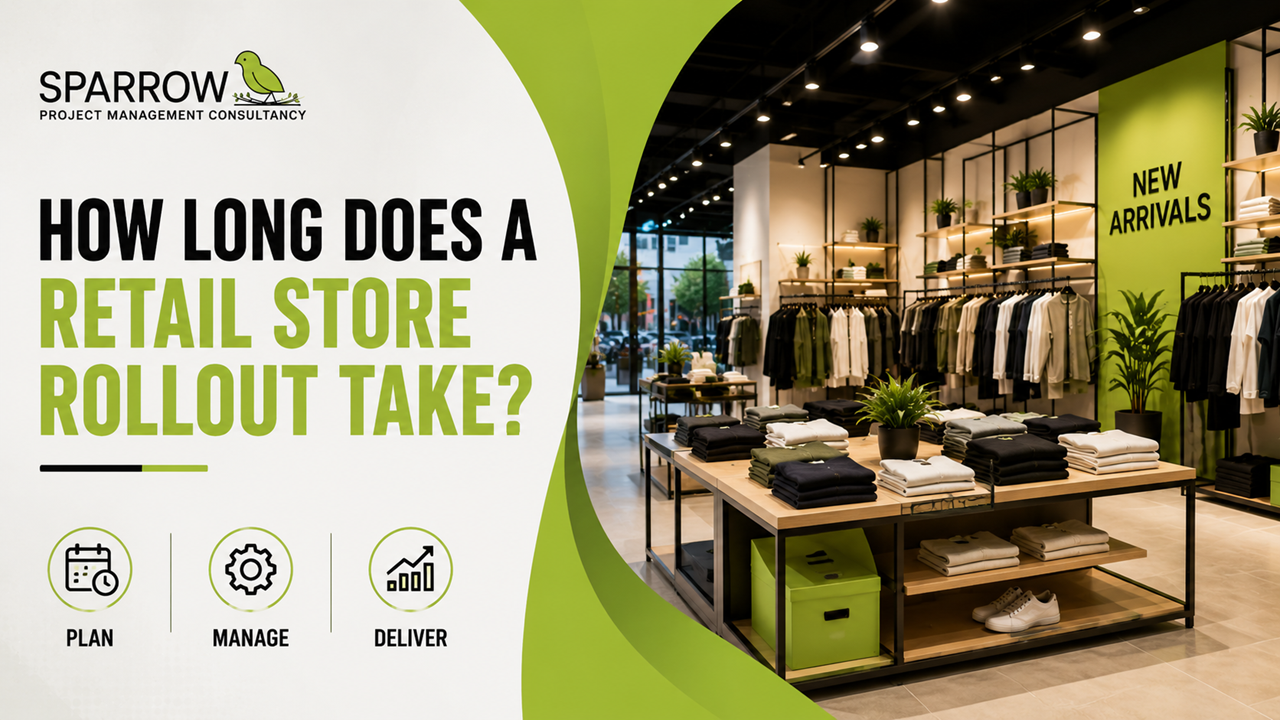
A typical retail store rollout takes approximately 6 to 14 weeks from initial site planning to final handover. Small kiosks and simple outlets may be completed in 3 to 6 weeks, while large, premium, or technically complex stores may require 12 to 20 weeks or more.
The actual duration depends on store size, design readiness, site condition, landlord approvals, material availability, fixture production, vendor capacity, and the speed of business decisions.
For retail brands, the rollout timeline is not just a construction schedule. It affects rent, inventory planning, staff recruitment, marketing campaigns, franchise commitments, and expected sales. A delay in one activity can affect the entire store opening plan.
Quick Answer
A standard retail store rollout usually takes 6 to 14 weeks. Planning and design may require 2 to 4 weeks, approvals 1 to 3 weeks, fit-out execution 3 to 8 weeks, and snagging and handover another 3 to 7 days. Complex stores may take longer.
Retail Store Rollout Timeline at a Glance
| Store Format | Typical Rollout Duration |
|---|---|
| Small kiosk | 3–5 weeks |
| Basic high-street shop | 4–7 weeks |
| Standard branded retail store | 6–10 weeks |
| Mall-based retail store | 8–14 weeks |
| Premium or luxury store | 12–20 weeks |
| Large-format store | 14–24 weeks |
| Store renovation or refresh | 2–6 weeks |
These timelines are indicative. The project may take longer when design, approvals, or procurement are incomplete before execution starts.
Main Stages of a Retail Store Rollout
A store rollout should be managed through clear phases rather than treated as one continuous construction activity.
1. Site Assessment and Project Brief
Typical duration: 2 to 5 days
The first stage is to understand the location and define what the store needs.
This includes:
- Site measurement
- Existing condition review
- Electrical load assessment
- HVAC and fire-system checks
- Landlord guideline review
- Material-entry restrictions
- Store capacity and operational requirements
- Budget and opening-date discussion
A proper site assessment helps identify technical and commercial risks before the design is finalized.
2. Design Development and Coordination
Typical duration: 1 to 3 weeks
The design stage includes layout planning, customer flow, fixtures, lighting, signage, storage, services, and visual merchandising requirements.
Drawings may include:
- Layout plan
- Flooring plan
- Ceiling plan
- Electrical drawings
- Lighting layout
- HVAC coordination
- Fire-safety coordination
- Fixture drawings
- Signage and facade drawings
- Branding details
The design should be coordinated with the actual site before work begins. Starting execution with incomplete drawings often creates rework and delays.
3. BOQ, Budget and Vendor Finalization
Typical duration: 5 to 12 days
Once the design is sufficiently clear, the Bill of Quantities should be prepared or reviewed.
This stage includes:
- Scope definition
- Quantity verification
- Vendor quotation comparison
- Rate negotiation
- Inclusion and exclusion review
- Contractor capability assessment
- Commercial finalization
- Work-order release
A low quotation does not always mean a lower final cost. Missing scope items may later appear as additional claims.
4. Mall, Landlord and Internal Approvals
Typical duration: 1 to 3 weeks
Approvals may run in parallel with design and vendor finalization.
Common approvals include:
- Layout approval
- MEP approval
- Fire-safety approval
- Signage approval
- Material approval
- Work permit
- Contractor registration
- Safety documentation
- Night-work permission
- Material-movement permission
Mall-based stores often require more coordination because work timings, access, debris removal, and approved service systems are controlled by the mall management.
5. Procurement and Fixture Production
Typical duration: 2 to 6 weeks
Procurement should begin as soon as specifications are approved. Long-lead items can determine the store opening date.
Common long-lead items include:
- Custom fixtures
- Cash counters
- Glass
- Lighting
- Signage
- Special flooring
- Decorative metalwork
- Imported hardware
- HVAC equipment
- Digital screens
Fixture manufacturing should be tracked separately from site execution. A store may be physically ready but unable to open because display units have not arrived.
6. Site Fit-Out Execution
Typical duration: 3 to 8 weeks
The fit-out stage usually includes:
- Civil modifications
- Electrical work
- HVAC work
- Fire-system modification
- Flooring
- Ceiling
- Wall finishes
- Painting
- Lighting installation
- Facade work
- Fixture installation
- IT and security systems
- Branding and signage
Work must happen in the right sequence. Poor sequencing can lead to damage, rework, and contractor overlap.
7. Snagging, Testing and Handover
Typical duration: 3 to 7 days
Before the store is handed over, all work should be checked against approved drawings and quality standards.
This stage includes:
- Snag-list preparation
- Snag closure
- Lighting tests
- Electrical testing
- HVAC checks
- Fire-system verification
- Furniture and fixture inspection
- Signage review
- Final cleaning
- Handover documentation
Snagging should begin during execution rather than only in the final week.
8. Visual Merchandising and Opening Readiness
Typical duration: 1 to 3 days
After construction handover, the retail operations team may need time for:
- Product placement
- Visual merchandising
- POS setup
- Staff training
- Inventory checks
- Trial operations
- Final brand inspection
The construction completion date and customer opening date should not be treated as the same milestone.
What Can Delay a Retail Store Rollout?
Incomplete Drawings
When drawings continue changing after execution begins, vendors cannot plan their work properly. This causes rework, procurement delays, and extra costs.
Late Business Decisions
Delays in approving materials, finishes, signage, vendors, or budgets can affect multiple activities.
Mall or Landlord Approvals
Missing documents, non-compliant drawings, or delayed submissions can stop work before it starts.
Long-Lead Materials
Fixtures, lighting, glass, signage, and special finishes should be ordered early. Late procurement can delay the entire opening.
Poor Vendor Coordination
Civil, MEP, furniture, signage, and IT vendors depend on each other. If they are not coordinated, one delayed activity affects the next.
Unexpected Site Conditions
Hidden services, uneven floors, water leakage, inadequate electrical load, or incomplete landlord work can create additional scope.
Design Changes During Execution
Changes after procurement or fabrication has started can affect both cost and schedule.
Weak Progress Tracking
Without daily and weekly tracking, delays may become visible only when recovery is difficult.
How to Complete a Retail Store Rollout Faster
Speed should come from preparation, not from rushing unfinished work.
Freeze the Design Before Site Start
Complete major design decisions and coordinate services before execution begins.
Identify Long-Lead Items Early
Prepare a procurement schedule for fixtures, lighting, signage, glass, hardware, and equipment.
Run Activities in Parallel
Approvals, procurement, and vendor onboarding can often run alongside design coordination when properly managed.
Create a Decision Tracker
Every pending decision should have an owner and deadline.
Use Standard Store Details
Retail brands opening multiple locations should standardize:
- Drawings
- Material specifications
- Fixture modules
- BOQ formats
- Quality checklists
- Vendor responsibilities
- Handover process
Monitor Critical Activities Daily
Not every activity requires daily escalation. Focus on tasks that directly affect the opening date.
Timeline for Multi-Store Rollouts
A multi-store rollout should not be calculated by multiplying one store’s timeline by the total number of stores.
For example, if one store takes eight weeks, ten stores do not necessarily take eighty weeks. Multiple sites can progress simultaneously through overlapping schedules.
A structured rollout may include:
- Sites under design
- Sites under approval
- Sites under procurement
- Sites under execution
- Sites under snagging
- Stores ready for opening
The total program duration depends on the number of project teams, fixture production capacity, approved vendors, and the brand’s decision-making process.
Retail Rollout Timeline Checklist
Before confirming a store opening date, check whether:
- Site possession is confirmed
- Site measurements are verified
- Drawings are approved
- BOQ is complete
- Vendor scope is clear
- Mall or landlord approvals are received
- Long-lead materials are ordered
- Fixture production has started
- Execution schedule is approved
- Daily reporting is active
- Quality inspections are planned
- Snagging dates are fixed
- Visual merchandising time is included
- Launch buffer is available
A buffer of a few days between handover and public opening can reduce unnecessary launch risk.
How Project Management Consultancy Helps
A retail project management consultant creates one coordinated system for design, approvals, procurement, construction, quality, and handover.
PMC support may include:
- Master project schedule
- Store-wise milestone tracking
- Approval tracker
- Procurement tracker
- Vendor coordination
- Daily and weekly progress reports
- Risk and delay identification
- Recovery planning
- Quality inspections
- Snag closure
- Opening-readiness review
The objective is not only to report delays. It is to identify constraints early and prevent them from affecting the store opening date.
FAQs
Can a retail store be completed in 30 days?
A small or standardized store may be completed in about 30 days if drawings, approvals, vendors, materials, and fixtures are ready before site execution starts. Complex stores usually need more time.
How long does a mall store fit-out take?
A standard mall store may take 8 to 14 weeks, including design, approvals, procurement, execution, snagging, and handover. Mall rules and approval processes can influence the duration.
What is the fastest stage of a retail rollout?
Physical site execution can move quickly when planning is complete. Delays usually occur before or during execution because of approvals, design changes, procurement gaps, or missing decisions.
Does the rollout timeline include design?
It depends on how the schedule is presented. A complete rollout timeline should include site assessment, design, approvals, procurement, execution, snagging, and opening readiness.
How long does a store renovation take?
A minor store refresh may take 2 to 4 weeks. A complete renovation involving demolition, services, new fixtures, and facade changes may require 6 to 12 weeks or more.
How can brands reduce rollout time across multiple stores?
Brands can reduce rollout time through standard drawings, modular fixtures, rate contracts, approved materials, repeat vendors, centralized procurement, and a common project-tracking system.
Conclusion
A retail store rollout generally takes 6 to 14 weeks, although the duration may be shorter for simple outlets and longer for premium or technically complex stores.
The most accurate timeline depends on design readiness, approvals, site conditions, procurement, vendor capacity, and decision speed. Starting construction early does not always lead to an earlier opening. A better result comes from completing planning, coordination, and procurement at the right time.
Retail brands can improve rollout speed by standardizing processes, tracking critical activities, ordering long-lead items early, and maintaining clear responsibility across all teams.
Planning a Retail Store Rollout?
Sparrow PMC provides end-to-end project management consultancy for retail stores, multi-store expansion, commercial offices, restaurants, salons, spas, and other commercial projects.
Contact Sparrow PMC for project planning, timeline assessment, execution monitoring, quality control, and opening-readiness support.