How Sparrow PMC Delivers Projects On Time and Within Budget
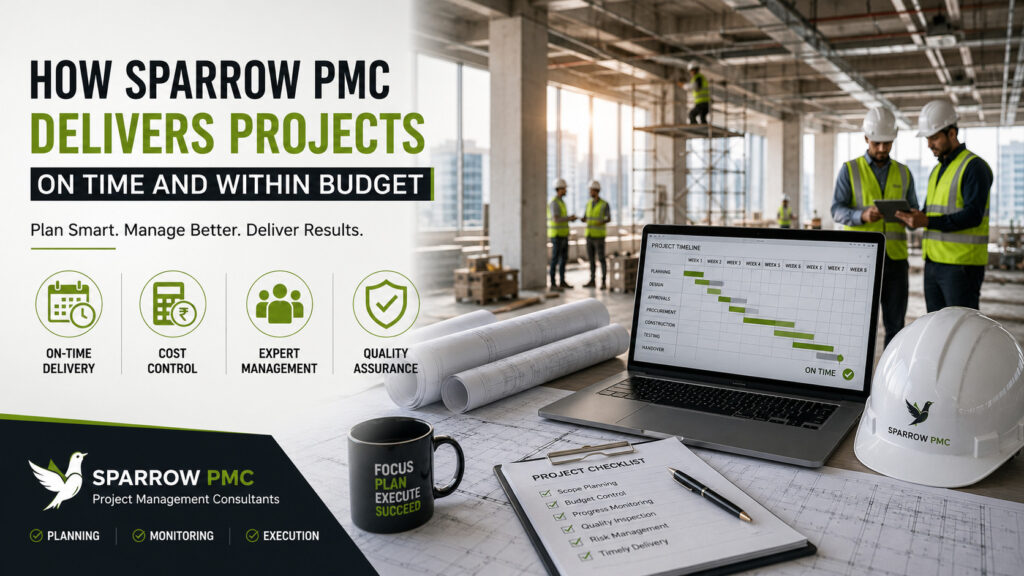
Delivering a project on time and within budget is one of the biggest challenges in commercial construction, retail fit-outs, office interiors, restaurant projects, salon and spa projects, residential projects, and multi-location rollouts. A project may start with a good design, an approved budget, and selected vendors. But without proper planning and monitoring, it can quickly face delays, cost overruns, quality issues, vendor gaps, material delays, and handover pressure. This is where Sparrow PMC brings structured project management. The focus is simple: plan correctly, monitor continuously, control costs, manage vendors, check quality, and hand over the project with fewer surprises. Quick Answer Sparrow PMC delivers projects on time and within budget by creating clear project plans, reviewing BOQ and scope, coordinating vendors, tracking timelines, monitoring site progress, controlling changes, checking quality, reviewing bills, managing risks, and ensuring proper snag closure before final handover. Why Projects Get Delayed or Cross Budget Most project delays do not happen because of one major failure. They usually happen because several small issues are not tracked at the right time. Common reasons include: Sparrow PMC focuses on identifying these risks early so that corrective action can be taken before the project timeline or budget is affected. Sparrow PMC’s Project Delivery Approach Sparrow PMC follows a practical project management approach that connects planning, cost control, execution, reporting, quality, and final handover. The aim is to give clients better visibility and ensure every stakeholder works towards the same project goal. 1. Clear Planning Before Site Execution A project should not start only because the site is available. It should start when the scope, drawings, budget, vendors, approvals, and timeline are properly understood. Sparrow PMC supports early planning through: This reduces confusion once execution begins. 2. BOQ and Scope Review The Bill of Quantities, or BOQ, is one of the most important documents in any project. If the BOQ is incomplete, the project can face extra claims and budget variations later. Sparrow PMC helps review: This gives the client better cost clarity before work starts. 3. Timeline and Milestone Tracking A project schedule is useful only when it is actively monitored. Sparrow PMC tracks project progress against defined milestones. Important milestones may include: Regular tracking helps identify which activity is delayed, why it is delayed, and what action is required. 4. Vendor and Contractor Coordination Commercial projects usually involve many vendors working together. Civil, electrical, HVAC, plumbing, fire safety, furniture, signage, IT, branding, and cleaning teams must work in the correct sequence. Sparrow PMC helps coordinate vendors through: Strong coordination reduces idle time, rework, and last-minute execution pressure. 5. Cost Control During Execution A project budget can change quickly if extra work, quantity variations, and scope changes are not controlled. Sparrow PMC helps manage cost through: The focus is not only to reduce cost. The focus is to ensure every cost is justified, approved, and properly documented. 6. Material and Procurement Tracking Late materials can delay the entire project. In retail, office, restaurant, salon, spa, and residential projects, many items need early planning. Long-lead items may include: Sparrow PMC helps track procurement so that critical materials reach the site as per the execution schedule. 7. Quality Checks at Every Stage Quality should not be checked only at the end. If quality issues are found late, correction takes more time and money. Sparrow PMC conducts quality monitoring for: Regular quality checks help reduce rework and improve final handover standards. 8. Change Control and Decision Tracking Changes are common in construction and fit-out projects. However, uncontrolled changes can disturb both budget and timeline. Sparrow PMC helps track changes by reviewing: This ensures that changes are not executed casually or without proper approval. 9. Risk Management and Early Escalation A strong project management system does not wait for problems to become serious. It identifies risks early and escalates them with practical action points. Common project risks include: Early escalation helps clients make timely decisions and avoid last-minute pressure. 10. Snag Closure and Handover Readiness A project is not complete when construction work stops. It is complete when the site is ready for actual use. Sparrow PMC supports handover through: This helps clients take over the site with fewer pending issues. Project Types Sparrow PMC Supports Sparrow PMC provides project management consultancy for different project categories, including: Each project has different requirements, but the project management principle remains the same: control time, cost, quality, vendors, risks, and handover. How Sparrow PMC Helps Keep Projects Within Budget Budget control is achieved through discipline at every stage. Sparrow PMC helps clients by: This reduces financial surprises and improves decision-making. How Sparrow PMC Helps Deliver Projects On Time Timely delivery requires more than pushing contractors. It requires planning, coordination, and consistent follow-up. Sparrow PMC supports timely delivery through: The goal is to control the project before delays become difficult to recover. Common Mistakes Sparrow PMC Helps Clients Avoid Avoiding these mistakes improves the chances of completing the project on time and within budget. FAQs How does Sparrow PMC control project timelines? Sparrow PMC controls timelines by preparing milestone schedules, tracking site progress, coordinating vendors, monitoring approvals, following up on procurement, identifying delays early, and creating recovery action plans. How does Sparrow PMC help reduce project cost overruns? Sparrow PMC helps reduce cost overruns through BOQ review, vendor comparison, extra item tracking, change order control, billing verification, and regular cost reporting. Does Sparrow PMC execute the construction work directly? Sparrow PMC works as a project management consultancy. It manages, monitors, and coordinates the project on behalf of the client. Execution is carried out by appointed contractors and vendors. When should Sparrow PMC be appointed? Sparrow PMC should ideally be appointed before execution begins. Early involvement helps with planning, BOQ review, vendor coordination, approval tracking, risk identification, and cost control. Can Sparrow PMC work with existing contractors? Yes. Sparrow PMC can coordinate with existing designers, contractors, vendors, consultants, landlords, and client teams to improve project control, reporting, quality, and handover readiness. What types of projects does Sparrow
Best Retail Construction Management Company in India
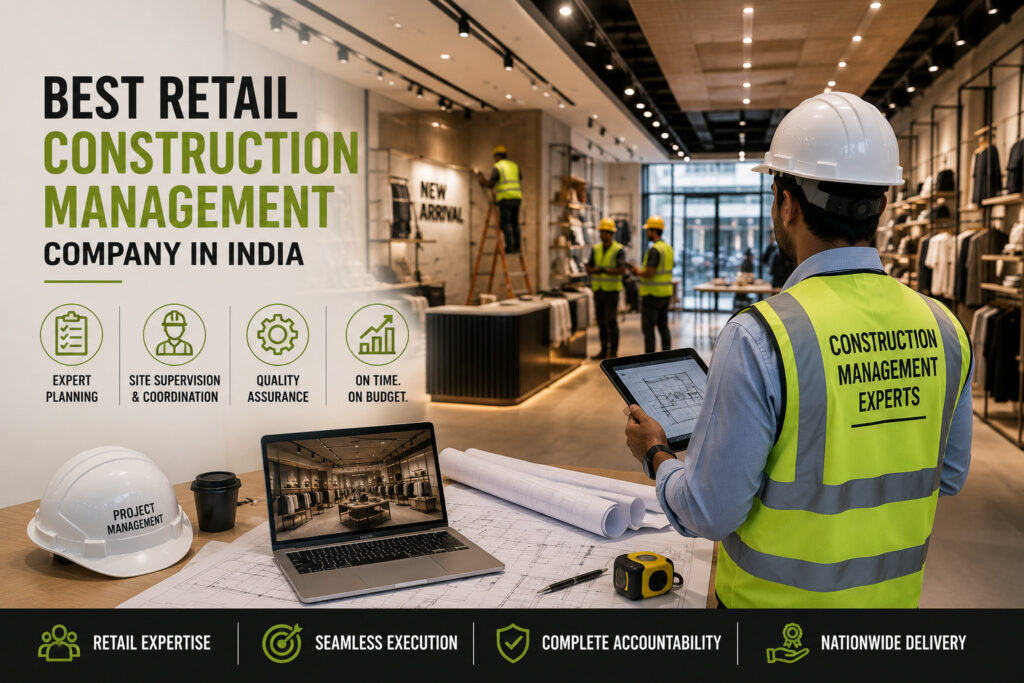
Choosing the best retail construction management company in India is an important decision for any brand planning a new store, showroom, franchise outlet, flagship store, kiosk, or multi-location rollout. Retail construction is not only about civil work and interiors. It includes design coordination, BOQ review, vendor management, mall approvals, MEP services, fixtures, signage, lighting, branding, quality control, cost tracking, snag closure, and final launch readiness. For retail brands, every delayed store can affect rent, sales, inventory, staff planning, marketing campaigns, and customer experience. A professional retail construction management partner helps brands open stores with better control over time, cost, quality, and execution. Quick Answer The best retail construction management company in India is one that can manage store planning, contractor coordination, site execution, cost control, quality checks, approval tracking, vendor performance, and final handover. For growing brands, the right partner should understand retail timelines, brand consistency, mall coordination, and multi-city rollout challenges. What Is Retail Construction Management? Retail construction management is the process of planning, coordinating, monitoring, and controlling the complete store execution process. It covers: A retail construction management company works as the client’s project control partner. Its role is to ensure that the store is delivered as per approved design, budget, timeline, and brand standards. Why Retail Brands Need Construction Management Retail projects are fast-moving and business-sensitive. A store opening date is usually linked with rent-free periods, launch campaigns, inventory movement, franchise commitments, and expected revenue. Without professional construction management, brands may face: A construction management partner helps reduce these risks by bringing structure, reporting, and accountability to the complete project. Top Retail Construction Management Companies in India The best company depends on store format, project size, city coverage, reporting expectations, budget, and rollout speed. Some companies commonly evaluated in the retail construction, commercial project management, and fit-out management space include: 1. Sparrow PMC Sparrow PMC provides project management consultancy for retail stores, commercial offices, restaurants, F&B outlets, salons, spas, residential projects, and multi-location rollouts. For retail construction management, the focus is on: Sparrow PMC is suitable for brands that need practical on-ground project control and clear visibility across store execution. 2. JLL Project Management JLL is widely considered by large occupiers, developers, and corporate clients for project management and commercial real estate services. 3. CBRE Project Management CBRE provides project and program management support for commercial real estate, design-build, cost consultancy, quality assurance, and risk management. 4. Colliers Project Management Colliers offers project management and advisory services for commercial interiors, corporate spaces, fit-outs, and real estate projects. 5. Cushman & Wakefield Project Services Cushman & Wakefield provides project and development services for commercial properties, occupiers, and fit-out projects. 6. Turner & Townsend Turner & Townsend is known for project management, cost management, programme management, and construction consultancy for complex projects. 7. Savills Project Management Savills provides project management and real estate advisory support for commercial and business spaces. 8. Knight Frank Project Management Knight Frank offers real estate advisory and project management support for commercial and construction-related projects. How to Choose the Best Retail Construction Management Company The best partner is not always the largest company. The right company should understand retail urgency, site-level execution, vendor coordination, and brand consistency. Check Retail Project Experience Ask whether the company has managed retail stores, showrooms, kiosks, mall stores, high-street stores, franchise outlets, or multi-location rollouts. Review Reporting Process A good company should provide structured reports showing: Check BOQ and Cost Control Ability Retail costs can increase quickly if the BOQ is unclear. The company should be able to review scope, quantities, extra items, bills, and vendor claims. Evaluate Vendor Coordination Retail construction involves multiple teams such as civil, electrical, HVAC, furniture, signage, IT, fire safety, and branding vendors. The management company must coordinate them in the correct sequence. Check Quality and Handover Process The store should not be handed over with major pending snags. A professional company should follow quality checklists, testing, snag closure, cleaning checks, and handover documentation. Cost of Retail Construction Management Services Retail construction management fees depend on project size, number of stores, city coverage, project duration, reporting frequency, and level of site involvement. Scope Fee Model Suitable For Single store management Fixed project fee One showroom or outlet Multi-store rollout Per store fee Brands opening multiple outlets Ongoing expansion Monthly retainer Continuous store rollout Site audit Per visit fee Progress or quality review BOQ and cost review Fixed professional fee Budget validation before execution A construction management fee should be seen as a project control investment. It can help reduce rework, delays, wrong billing, quality issues, and uncontrolled cost variations. Typical Retail Construction Timeline Retail construction timelines vary by size, format, approvals, material availability, and design complexity. Project Stage Typical Duration Site survey and planning 2–5 days Design and BOQ coordination 1–3 weeks Mall or landlord approvals 1–3 weeks Vendor finalisation 5–10 days Site execution 3–8 weeks Fixtures and signage installation 1–3 weeks Snagging and handover 3–7 days A small store may move faster, while premium stores, jewellery showrooms, restaurants, large-format stores, and flagship outlets may take longer. Key Services Offered Site Assessment The site is checked for dimensions, electrical load, HVAC provision, fire safety, plumbing, access rules, landlord conditions, and execution constraints. Design and BOQ Coordination Drawings and BOQ are reviewed to reduce missing scope, wrong quantities, and execution confusion. Vendor Management Contractors and vendors are coordinated for civil, MEP, furniture, fixtures, signage, branding, and final cleaning. Timeline Monitoring Store-wise milestones are tracked to identify delays early and support recovery planning. Quality Inspection Work is checked against approved drawings, material specifications, finish standards, and brand guidelines. Handover Support Snag closure, testing, cleaning, documentation, and opening-readiness checks are managed before final handover. Common Mistakes Retail Brands Should Avoid Starting Work Without Complete Drawings Incomplete drawings create rework, confusion, and delay. Choosing Vendors Only on Lowest Price The lowest quote may exclude important scope items and later become expensive. Ignoring Mall Approval Timelines Mall permissions, work permits, night work approvals, and material movement rules should
Design Coordination and Execution Management Services Explained
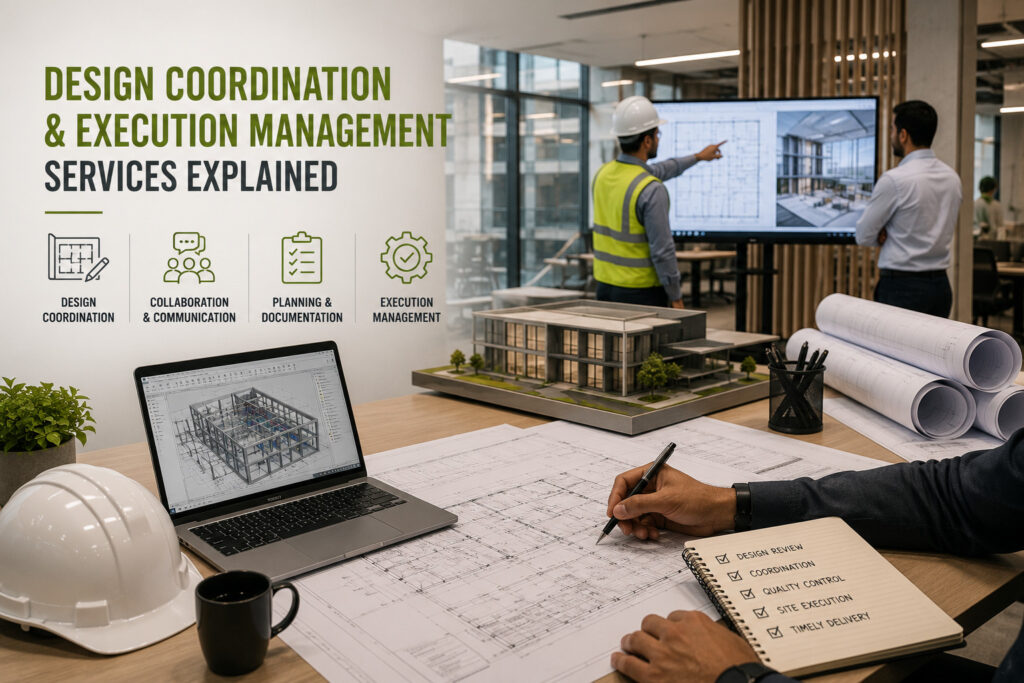
Every successful commercial project depends on two important things: a well-coordinated design and properly managed execution. A project may have a strong concept, good drawings, and experienced contractors, but if design coordination and execution management are weak, the project can still face delays, rework, cost escalation, and poor finishing. This is especially true for commercial offices, retail stores, restaurants, salons, spas, residential projects, showrooms, and fit-out works. These projects involve architects, interior designers, MEP consultants, contractors, vendors, landlords, approval teams, and client stakeholders. Design coordination and execution management services help bring all these teams together so that the project moves from drawings to site completion in a controlled and practical manner. Quick Answer Design coordination and execution management help ensure that project drawings, BOQ, vendors, materials, site work, timelines, quality checks, and handover are properly aligned. These services reduce design clashes, site confusion, rework, delays, cost variations, and quality issues during commercial construction or interior fit-out projects. What Is Design Coordination? Design coordination is the process of aligning all design inputs before and during execution. It ensures that architectural, interior, structural, electrical, HVAC, plumbing, fire safety, lighting, furniture, signage, and branding drawings work together without conflict. For example, in an office project, the ceiling layout, lighting plan, HVAC diffusers, fire sprinklers, speakers, CCTV points, and access panels must all be coordinated. If these are planned separately, the site team may face clashes during execution. What Is Execution Management? Execution management is the process of monitoring and controlling actual site work. It ensures that contractors and vendors execute the project as per approved drawings, specifications, budget, timeline, and quality standards. Execution management includes: The purpose is to make sure that the approved design is converted into a finished space correctly. Why Design Coordination Is Important Poor design coordination is one of the biggest reasons for project delays and rework. Common problems include: When these issues are discovered during execution, the project loses time and money. Proper design coordination helps identify them before work reaches the critical stage. Why Execution Management Is Important Even a well-coordinated design needs strong site management. Contractors, vendors, and suppliers must work in the right sequence. Materials must arrive on time. Quality must be checked regularly. Pending decisions must be escalated quickly. Without execution management, projects may face: Execution management gives the client visibility and control throughout the project. Key Services Included in Design Coordination Drawing Review All drawings are reviewed to check whether they are complete, practical, and suitable for execution. This may include: MEP Coordination MEP coordination is critical in commercial projects. Electrical, HVAC, plumbing, fire safety, and data systems must be aligned with the interior design. A coordinated MEP plan reduces site clashes and avoids last-minute modifications. BOQ Alignment The BOQ should match the approved drawings. If drawings show an item but the BOQ does not include it, the project may face extra cost later. BOQ alignment helps check: Material and Finish Coordination Approved materials must be practical for procurement, installation, durability, and maintenance. This includes: Drawing Revision Control Projects often have design changes. A proper revision control system ensures that vendors work only on the latest approved drawings. This prevents wrong execution and costly rework. Key Services Included in Execution Management Site Mobilisation Planning Before work starts, the site must be ready for execution. This includes: Vendor Coordination Execution requires coordination between multiple vendors. These may include: The execution manager ensures that every vendor works according to the approved schedule. Timeline Monitoring The project schedule is tracked regularly to check planned vs actual progress. Timeline monitoring includes: Quality Inspection Quality checks ensure that work is completed as per approved drawings and specifications. Inspection may cover: Change Management Changes during execution should be controlled and documented. Each change should clearly mention: This prevents disputes and uncontrolled cost escalation. Snagging and Handover Before handover, all defects and pending works should be tracked and closed. Handover support includes: Difference Between Design Coordination and Execution Management Area Design Coordination Execution Management Main focus Aligning drawings and specifications Managing actual site execution Stage Before and during execution During execution and handover Key role Prevent design clashes Control site progress and quality Main output Coordinated drawings and clear scope Completed project as per approved plan Risk controlled Rework due to design gaps Delay, poor quality, vendor issues Involves Designers, consultants, PMC, client Contractors, vendors, PMC, site teams Both services are connected. Good design coordination reduces execution problems, and good execution management ensures the design is delivered correctly. Benefits for Commercial Projects Reduced Rework Coordinated drawings help avoid repeated corrections during site execution. Better Cost Control Clear scope and controlled changes reduce extra claims and budget surprises. Faster Execution When vendors have clear drawings, approved materials, and defined responsibilities, work moves faster. Improved Quality Regular quality checks help maintain finishing standards and reduce defects. Better Vendor Accountability Each vendor’s scope, timeline, and responsibility are clearly tracked. Clearer Communication Project stakeholders get structured updates instead of scattered communication. Smoother Handover Snagging, testing, cleaning, and documentation are managed properly before handover. Common Mistakes to Avoid Starting Work Without Coordinated Drawings This is one of the most common causes of rework and delay. Ignoring MEP Coordination MEP clashes can disturb ceiling heights, lighting layout, fire safety, and operational use. Not Matching BOQ With Drawings Missing BOQ items often become extra claims during execution. Using Old Drawing Revisions Wrong drawings can lead to incorrect site work and material wastage. Depending Only on Contractor Updates Independent execution monitoring gives better project visibility. Starting Snagging Too Late Quality checks should happen throughout the project, not only at the end. Checklist Before Execution Starts Before starting site work, check: This checklist helps reduce confusion before execution begins. How Sparrow PMC Supports Design Coordination and Execution Management Sparrow PMC provides project management consultancy for retail stores, commercial offices, restaurants, F&B outlets, salons, spas, residential projects, and commercial fit-outs. Sparrow PMC supports clients with: The objective is to help clients move from design to execution with better control,
Best Project Management Consultancy for Corporate Office Expansion

Corporate office expansion is an important growth step for any business. Whether a company is opening a new branch, expanding its headquarters, adding more workstations, relocating teams, or creating a premium client-facing office, the project must be planned and managed carefully. An office expansion directly affects business operations, employee productivity, client experience, brand image, and future scalability. If the project is delayed or poorly managed, it can disturb seating plans, hiring schedules, lease commitments, IT setup, internal operations, and move-in timelines. This is why choosing the best project management consultancy for corporate office expansion is important. A professional PMC helps businesses manage planning, design coordination, budgeting, vendors, approvals, execution, quality, and handover through one structured system. Quick Answer The best project management consultancy for corporate office expansion is one that can manage project planning, design coordination, BOQ review, vendor management, timeline tracking, cost control, MEP coordination, quality inspections, billing review, snag closure, and final handover. The right PMC helps companies expand offices with less disruption and better project control. Why Corporate Office Expansion Needs Professional PMC Support Corporate office expansion is not just an interior project. It is a business continuity project. The new or expanded office must be ready for teams, meetings, IT systems, leadership cabins, collaboration areas, reception, pantry, storage, security, and daily operations. Without professional project management, companies may face: A PMC gives leadership better visibility and reduces dependence on verbal updates from contractors. What Does a PMC Do in Corporate Office Expansion? A Project Management Consultancy acts as the client’s project control partner. It does not replace the architect, interior designer, or contractor. Instead, it coordinates all stakeholders and ensures that the project moves as per approved budget, timeline, design, and quality standards. Pre-Execution Planning Before execution begins, the PMC reviews project readiness. This includes: Execution Monitoring During site work, the PMC tracks actual progress and coordinates vendors. This includes: Handover Management The office should be handed over only when it is ready for practical use. This includes: Top PMC Companies to Consider for Corporate Office Expansion in India The best consultancy depends on project size, city, complexity, budget, reporting expectations, and required involvement. Some companies commonly considered for office expansion and commercial project management include: 1. Sparrow PMC Sparrow PMC provides project management consultancy for corporate offices, commercial interiors, retail stores, restaurants, F&B outlets, salons, spas, residential projects, and multi-location rollouts. For corporate office expansion, Sparrow PMC supports: Sparrow PMC is suitable for businesses that need practical, execution-focused project control and clear visibility from planning to handover. 2. JLL Project Management JLL is widely considered by large occupiers and corporate clients for workplace, real estate, and commercial project management support. 3. CBRE Project Management CBRE offers project and program management support for commercial real estate, corporate workplaces, and large office projects. 4. Colliers Project Management Colliers provides project management and advisory support for office interiors, commercial fit-outs, and workplace projects. 5. Cushman & Wakefield Project Services Cushman & Wakefield is often considered by occupiers, investors, and commercial clients for office and real estate project delivery support. 6. Turner & Townsend Turner & Townsend is known for project management, cost management, programme management, and construction consultancy for complex projects. 7. Savills Project Management Savills provides real estate-linked project management and workplace delivery support for commercial clients. 8. Knight Frank Project Management Knight Frank is commonly evaluated for commercial real estate advisory and project management support. How to Choose the Best PMC for Office Expansion The best PMC is not always the biggest name. The right partner should understand the business impact of office expansion and manage the project with practical control. Check Office Project Experience Ask whether the consultant has handled corporate offices, branch offices, headquarters, workplace renovations, or multi-location office expansion projects. Review Reporting Quality A good PMC should provide structured reports that show: Check BOQ and Cost Control Ability Office expansion costs can increase if the BOQ is unclear. The PMC should review quantities, vendor scope, extra items, running bills, and final claims. Check MEP Coordination Capability Corporate offices require proper electrical, HVAC, fire safety, lighting, IT, networking, access control, CCTV, and pantry service coordination. Check Handover Process A strong PMC should ensure snag closure, testing, documentation, final cleaning, and operational readiness before handover. Cost of PMC Services for Corporate Office Expansion PMC fees depend on office size, city, project duration, scope, reporting frequency, complexity, and level of site involvement. Project Scope Common Fee Model Suitable For Small office expansion Fixed project fee Startups, small teams, branch offices Mid-size corporate office Fixed or percentage-based fee Growing businesses and regional offices Large headquarters Monthly or percentage-based fee Complex corporate spaces Multi-city office expansion Retainer or per-site fee Companies expanding across locations BOQ and cost review Fixed professional fee Budget validation before execution Site audit Per visit fee Progress or quality check A PMC fee should be considered a project control investment. Good project management can reduce rework, billing disputes, delay costs, poor coordination, and handover issues. Typical Corporate Office Expansion Timeline Office expansion timelines vary depending on area, design complexity, approvals, furniture lead time, IT setup, and vendor availability. Phase Typical Duration Site survey and planning 3–7 days Design and BOQ coordination 1–3 weeks Vendor finalisation 5–15 days Building or landlord approvals 7–21 days Site execution 4–12 weeks IT, furniture and systems setup 1–3 weeks Snagging and handover 3–10 days A small office may move faster, while a large corporate office with complex MEP, meeting rooms, server rooms, workstations, cabins, collaboration zones, and branding may take longer. Common Mistakes Businesses Make During Office Expansion Starting Without Complete Drawings Incomplete drawings create site confusion, rework, and delays. Ignoring IT and Networking Planning Data points, server rooms, access control, CCTV, Wi-Fi, and meeting-room technology should be planned early. Choosing Vendors Only on Lowest Price The lowest quote may exclude important scope items and later become expensive through extra claims. Delaying Furniture Decisions Workstations, loose furniture, cabins, conference tables, and storage units can affect move-in dates if
Restaurant Fit-Out Project Management Services in India

Opening a restaurant in India requires more than attractive interiors and good food. A restaurant fit-out involves kitchen planning, civil work, electrical services, HVAC, exhaust systems, plumbing, gas lines, fire safety, equipment installation, furniture, lighting, branding, approvals, and final launch readiness. Because so many technical and operational elements are involved, restaurant projects can easily face delays, cost overruns, vendor coordination issues, and quality problems. This is where restaurant fit-out project management services in India become important. A professional Project Management Consultancy, or PMC, helps restaurant owners, QSR brands, café operators, franchise owners, cloud kitchens, and F&B chains manage the complete fit-out process from planning to handover. Quick Answer Restaurant fit-out project management services in India help manage restaurant setup from site survey to final handover. These services include design coordination, BOQ review, vendor management, cost control, timeline tracking, kitchen service coordination, quality checks, approval follow-up, snag closure, and launch-readiness support. Why Restaurant Fit-Out Projects Need Project Management Restaurant projects are more complex than regular commercial interiors because they must support both customer experience and kitchen operations. A restaurant must look good, but it must also function properly every day. The kitchen flow, exhaust, HVAC, plumbing, gas line, storage, staff movement, service counter, seating layout, lighting, and safety systems must all work together. Without professional project management, restaurant owners may face: A restaurant PMC helps reduce these risks by creating a clear execution plan and monitoring every stage of work. What Are Restaurant Fit-Out Project Management Services? Restaurant fit-out project management services cover the complete planning, coordination, monitoring, and control of a restaurant setup project. These services may include: The main purpose is to ensure that the restaurant is completed as per approved design, budget, timeline, and operational requirements. Key Areas Managed in a Restaurant Fit-Out Site Survey and Feasibility Review Before execution begins, the site must be checked properly. A site survey reviews: This stage helps identify technical risks before they become costly site problems. Design and Kitchen Coordination Restaurant design must be coordinated with kitchen functionality. The customer area and back-of-house operations should not be planned separately. A PMC helps coordinate: This ensures that the restaurant is not only visually attractive but also operationally practical. BOQ and Cost Review The Bill of Quantities, or BOQ, defines the project scope and cost structure. If the BOQ is incomplete, the project may face extra claims during execution. PMC support includes: This gives owners better cost visibility and reduces financial surprises. Vendor and Contractor Coordination Restaurant fit-out projects involve multiple vendors working in a limited space. Common vendors include: A PMC coordinates these vendors so work happens in the correct sequence and delays are escalated early. Site Execution Monitoring During execution, project monitoring helps track actual progress against the approved timeline. This includes: This helps the owner understand what is completed, what is pending, and what needs immediate attention. Quality Inspection Restaurant quality must be checked during execution, not only at the end. Quality checks may include: Good quality control reduces rework and supports a smoother launch. Cost of Restaurant Fit-Out Project Management Services in India Restaurant PMC fees depend on project size, location, duration, site complexity, reporting frequency, and scope of involvement. Common Fee Models Scope Fee Model Suitable For Single restaurant setup Fixed project fee Café, QSR, casual dining, fine dining Multi-outlet rollout Per outlet fee Restaurant chains and franchise brands Ongoing expansion Monthly retainer Brands opening outlets regularly Site audit Per visit fee Progress or quality review BOQ and cost review Fixed professional fee Budget validation before execution A PMC fee should be considered a project control investment. It can help reduce rework, delays, extra claims, billing disputes, and poor-quality execution. Typical Restaurant Fit-Out Timeline in India The timeline depends on restaurant size, format, kitchen complexity, approvals, and material availability. Project Stage Typical Duration Site survey and planning 3–7 days Design and services coordination 1–3 weeks BOQ and vendor finalization 1–2 weeks Mall or landlord approvals 1–3 weeks Civil and interior execution 3–8 weeks MEP, kitchen and exhaust installation 2–5 weeks Snagging and handover 3–10 days A small café or QSR may be completed faster, while a large restaurant with complex kitchen, exhaust, HVAC, and premium interiors may take longer. Common Mistakes Restaurant Owners Should Avoid Starting Without Complete Technical Drawings Restaurant projects need coordinated drawings for interiors, kitchen, electrical, HVAC, exhaust, plumbing, gas, and fire safety. Missing drawings create site confusion and rework. Ignoring Exhaust Planning Exhaust is one of the most critical parts of a restaurant project. If the exhaust route is not checked early, the project may face major delays. Delaying Kitchen Equipment Decisions Kitchen equipment size and utility requirements affect electrical points, plumbing, gas lines, exhaust, and kitchen layout. Choosing Vendors Only on Lowest Price The lowest quote may exclude important scope items. Later, these exclusions become extra costs. Not Tracking Changes Design or scope changes should always be documented with cost and timeline impact. Taking Handover Without Testing Electrical, HVAC, exhaust, plumbing, gas, fire safety, and kitchen equipment should be tested before handover. Restaurant Fit-Out Checklist Before starting a restaurant fit-out, owners should check: This checklist helps reduce avoidable delays and improves project control. How Sparrow PMC Supports Restaurant Fit-Out Projects Sparrow PMC provides project management consultancy for restaurant, F&B, café, QSR, retail, office, salon, spa, residential, and commercial fit-out projects. For restaurant fit-outs, Sparrow PMC supports: The focus is to help restaurant owners and F&B brands complete projects with better control, clearer reporting, stronger quality, and smoother handover. FAQs What is restaurant fit-out project management? Restaurant fit-out project management is the process of planning, coordinating, monitoring, and controlling the setup of a restaurant. It includes design coordination, vendors, cost, timeline, quality, kitchen services, approvals, snagging, and handover. Why do restaurants need PMC services? Restaurants need PMC services because they involve many technical elements such as kitchen layout, exhaust, HVAC, plumbing, gas lines, fire safety, lighting, interiors, equipment, and approvals. PMC helps coordinate these areas and reduce project risks. How long does a
Construction Cost Management Consultancy for Commercial Projects
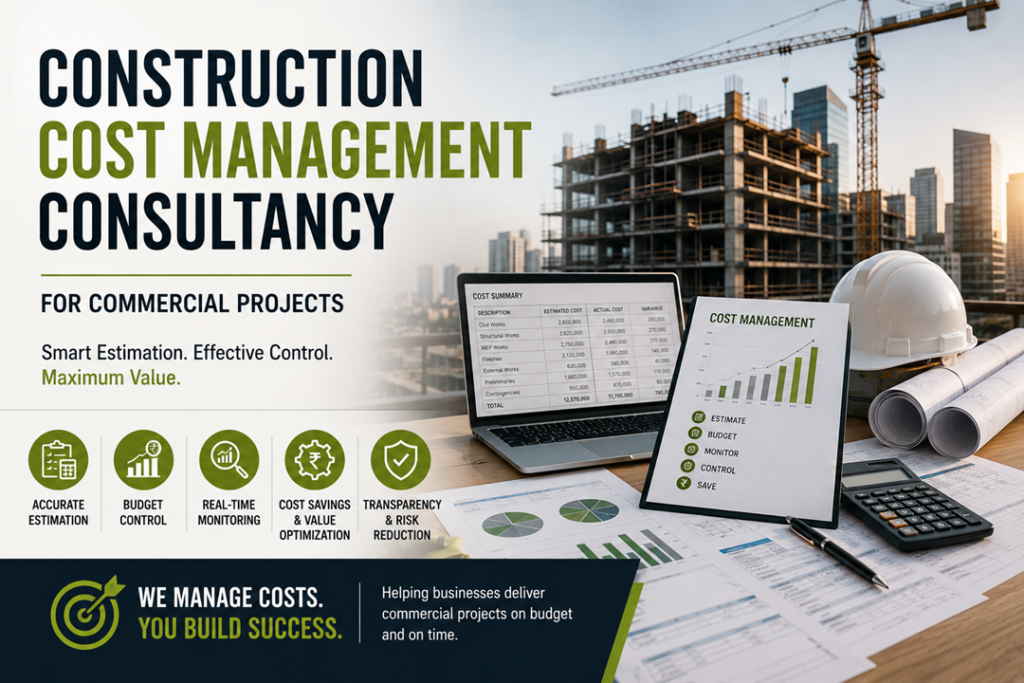
Commercial projects require strong financial control from the first planning stage to final handover. Whether the project is a retail store, office, restaurant, showroom, salon, spa, warehouse, or commercial interior fit-out, cost decisions made during planning directly affect the final project outcome. Many businesses start projects with an estimated budget but later face extra claims, BOQ gaps, material changes, scope confusion, vendor disputes, and unplanned expenses. This usually happens when cost management is not handled professionally. Construction cost management consultancy for commercial projects helps clients plan, monitor, control, and verify project costs through a structured process. It gives better visibility over budgets, vendor quotes, quantities, change orders, billing, and cost risks. Quick Answer Construction cost management consultancy helps commercial project owners control project budgets, BOQ accuracy, vendor quotations, material costs, extra items, running bills, change orders, and final costs. It ensures better financial visibility so businesses can complete projects within approved budgets and avoid unnecessary cost escalation. What Is Construction Cost Management Consultancy? Construction cost management consultancy is a professional service focused on controlling the financial side of a construction or fit-out project. It includes: The consultant works on behalf of the client to ensure that the project cost remains transparent, justified, and properly documented. Why Commercial Projects Need Cost Management Commercial projects are business investments. A delay or cost overrun can affect cash flow, launch plans, rent, revenue, investor confidence, and operational readiness. Cost management is important because commercial projects often involve multiple vendors and fast decisions. Common cost problems include: A cost management consultant helps identify these risks before they become expensive problems. Key Services in Construction Cost Management Budget Planning The first step is to create a realistic project budget based on project type, site condition, design intent, material specifications, quality expectations, and timeline. A proper budget should include: This helps the client understand the complete financial requirement before execution begins. BOQ Review The Bill of Quantities, or BOQ, is the base document for cost control. If the BOQ is incomplete, the project is likely to face extra claims later. BOQ review includes: A strong BOQ reduces confusion between the client, contractor, consultant, and vendors. Vendor Quote Comparison Different vendors may quote differently for the same project. Some may include full scope, while others may exclude important items. A cost consultant compares quotations on equal scope. This includes checking: This helps the client avoid selecting a vendor only because the quote looks cheaper. Value Engineering Value engineering means improving cost efficiency without reducing project quality or business functionality. It may include: The goal is not to make the project cheap. The goal is to spend correctly where it matters. Change Order Control Commercial projects often change during execution. Some changes are necessary, but they must be tracked properly. A cost consultant reviews: No major change should proceed without documented approval. Billing Verification Contractor bills should be checked against actual work completed, approved BOQ, site measurements, and agreed rates. Billing verification includes: This protects the client from overbilling and billing disputes. Typical Cost Areas in Commercial Projects Cost Area What It Includes Civil and interiors Flooring, partitions, ceiling, painting, finishes Electrical Wiring, DBs, lights, power points, testing HVAC AC units, ducts, piping, ventilation Plumbing Water supply, drainage, fixtures, testing Fire safety Fire alarm, sprinklers, extinguishers, approvals Furniture and fixtures Workstations, counters, display units, storage Signage and branding Facade signage, internal graphics, brand elements IT and security CCTV, access control, data cabling, POS support Professional fees Design, PMC, cost consultancy, approvals Contingency Unforeseen changes, minor variations, site risks Benefits of Construction Cost Management Consultancy Better Budget Control The client gets a clear understanding of estimated cost, approved budget, committed cost, paid amount, and pending cost. Reduced Cost Overruns Early BOQ review, scope clarity, and change tracking reduce unnecessary expenses. Fair Vendor Evaluation Vendors are compared on equal scope instead of only headline price. Lower Billing Disputes Measurement checks and documentation reduce confusion during running bills and final bills. Improved Decision-Making Management gets clear cost reports before approving changes or vendor payments. Better Project Transparency Every major cost decision is documented, reviewed, and approved. Common Cost Mistakes Businesses Should Avoid Starting Without a Detailed BOQ A rough estimate is not enough for commercial execution. A detailed BOQ is required for cost control. Choosing the Lowest Quote The lowest quote may exclude important scope items and become expensive later. Ignoring MEP Costs Electrical, HVAC, plumbing, fire safety, IT, and security can form a major part of commercial project cost. Not Tracking Extra Items Unapproved extra work can create major billing disputes. Delaying Material Decisions Late material approvals may increase procurement cost and delay execution. No Contingency Budget Every project should keep a reasonable contingency for site conditions and minor changes. Cost Management Checklist for Commercial Projects Before starting execution, businesses should check: This checklist helps reduce financial risk before work begins. How Sparrow PMC Supports Cost Management Sparrow PMC provides project management consultancy and cost control support for retail stores, commercial offices, restaurants, F&B outlets, salons, spas, residential projects, and commercial fit-outs. Cost management support may include: The focus is to help clients maintain better financial visibility and avoid unnecessary cost escalation during commercial projects. FAQs What is construction cost management consultancy? Construction cost management consultancy is a professional service that helps clients plan, monitor, review, and control project costs. It includes budgeting, BOQ review, vendor comparison, change tracking, billing verification, and cost reporting. Why is cost management important in commercial projects? Cost management is important because commercial projects involve multiple vendors, materials, services, approvals, and changes. Without proper control, the project can exceed the approved budget and affect business planning. How does a cost consultant reduce project cost? A cost consultant reduces unnecessary cost by checking BOQ accuracy, comparing vendor quotes, identifying missing scope, reviewing extra claims, verifying bills, and suggesting practical value engineering options. What is BOQ review? BOQ review means checking the Bill of Quantities for correct quantities, clear item descriptions, material specifications, inclusions, exclusions, missing scope,
Multi-City Retail Expansion Management Services Across India

Multi-City Retail Expansion Management Services Across India Expanding a retail brand across multiple cities in India requires more than opening stores one by one. It requires a structured rollout system that can manage locations, vendors, timelines, budgets, approvals, quality, reporting, and launch readiness across different regions. A store in Delhi NCR, Mumbai, Bengaluru, Hyderabad, Pune, Chennai, Kolkata, Ahmedabad, Jaipur, Lucknow, or a Tier-2 city may face completely different site conditions, landlord processes, mall rules, vendor availability, material timelines, and execution challenges. This is why multi-city retail expansion management services are important for growing retail brands. A professional retail PMC helps brands manage expansion with better control, visibility, and consistency across India. Quick Answer Multi-city retail expansion management services help brands manage retail store rollouts across different Indian cities through site assessment, rollout planning, design coordination, BOQ review, vendor management, cost tracking, timeline monitoring, quality inspection, snag closure, and store launch readiness. The goal is to open stores faster, more consistently, and with better control. Why Multi-City Retail Expansion Needs Professional Management Retail expansion across India involves multiple moving parts. Every location needs coordination between the brand team, landlord, mall management, designer, contractor, fixture vendor, signage team, MEP vendors, IT team, operations team, and local agencies. Without structured management, brands may face: A professional PMC creates one central system to track every store from planning to handover. What Are Multi-City Retail Expansion Management Services? Multi-city retail expansion management services cover the complete process of planning, coordinating, monitoring, and controlling multiple retail projects across different locations. These services may include: The objective is to ensure every store is delivered as per brand expectations, approved budget, and launch timeline. Key Challenges in Retail Expansion Across India 1. Different Site Conditions Every property is different. Some stores are bare shell, some are warm shell, and some are renovation sites. A PMC checks: This helps the brand identify risks before execution begins. 2. Approval Delays Mall and landlord approvals can delay store execution. Common approvals include: A PMC tracks approvals and escalates pending items early. 3. Vendor Coordination Across Cities Retail projects involve multiple vendors working together. These may include: The PMC ensures all vendors work in the correct sequence and follow the approved timeline. 4. Brand Standard Consistency Customers expect the same brand experience across locations. Store design, lighting, signage, fixtures, flooring, facade, and finishes must remain consistent. PMC support helps monitor: This is critical for retail chains, franchise brands, lifestyle brands, jewellery stores, fashion brands, electronics stores, beauty brands, and F&B outlets. 5. Cost Control Across Locations Costs can vary by city due to labour rates, material availability, logistics, site condition, and landlord requirements. A PMC helps control cost through: This helps the brand maintain better budget discipline across locations. 6. Timeline Control Retail stores are often linked to rent-free periods, launch campaigns, inventory movement, franchise commitments, and revenue targets. Timeline tracking includes: A structured tracker helps leadership identify which stores are on track, delayed, or at risk. Scope of Multi-City Retail Expansion Management Rollout Planning Rollout planning defines how many stores will open, in which cities, and within what timeframe. This includes: A clear rollout plan helps the brand avoid execution confusion. Site Survey and Assessment Before execution begins, every site must be technically assessed. The site assessment checks: This prevents wrong assumptions at the planning stage. Design Coordination Retail rollout requires complete and coordinated drawings. This may include: The PMC helps ensure drawings are ready before execution starts. BOQ and Budget Review A clear BOQ reduces disputes and cost variation. PMC review includes: This is especially useful when stores are being executed in different cities by different vendors. Procurement and Fixture Tracking Retail stores often depend on long-lead items. These may include: A PMC tracks procurement so stores do not remain incomplete due to missing materials. Site Execution Monitoring Site execution monitoring includes: This gives the brand real visibility across multiple live locations. Quality Inspection Quality inspection helps ensure every store meets approved brand standards. Checks may include: Quality checks should happen during execution, not only at handover. Snagging and Handover Before handover, all pending issues should be listed and closed. Handover support includes: A store should be handed over only when it is ready for operations. Benefits of Multi-City Retail Expansion Management Faster Store Rollouts Structured planning and tracking help brands open stores with fewer delays. Better Brand Consistency Stores across different cities are monitored against approved brand standards. Improved Cost Control BOQ review, billing checks, and change tracking reduce uncontrolled variations. Clear Visibility for Leadership Management gets store-wise updates, delay alerts, and decision trackers. Stronger Vendor Accountability Vendor performance is tracked across each location. Reduced Internal Pressure Brand teams can focus on business expansion while the PMC manages project-level execution control. Better Launch Readiness Final handover, snag closure, cleaning, signage, systems, and visual readiness are tracked properly. Multi-City Retail Expansion Dashboard Brands should maintain a store-wise rollout tracker. Store Location Stage Key Risk Action Required Delhi NCR Execution Fixture delay Vendor follow-up Mumbai Approval Signage approval pending Mall coordination Bengaluru Procurement Lighting delivery pending Procurement tracking Pune Snagging Final finishing issues Snag closure Hyderabad Handover Cleaning pending Final readiness check A live dashboard helps leadership understand the exact status of every location. Retail Expansion Checklist Before starting multi-city expansion, brands should confirm: This checklist helps convert expansion into a controlled programme. Common Mistakes in Multi-City Retail Expansion Starting Without Standard Drawings Without standard drawings, every store becomes a separate design exercise. Not Checking Site Conditions Early Site risks discovered late can delay execution and increase cost. Using Different BOQ Formats Different BOQ formats make cost comparison difficult. Depending Only on Local Vendors Local vendors may need close monitoring to maintain brand standards. Ignoring Long-Lead Items Fixtures, lighting, signage, and equipment must be tracked early. Weak Reporting Without structured reporting, leadership gets delayed or incomplete information. Opening Stores Without Proper Snag Closure Pending snags can affect customer experience and operational performance. How Sparrow PMC Supports Multi-City Retail Expansion Sparrow
Why Businesses Need Independent Project Management Consultants

Developers manage projects where timelines, cost, quality, contractor performance, approvals, safety, and handover directly affect profitability and reputation. Whether the project is a commercial building, retail space, office development, villa project, residential project, mixed-use property, or interior fit-out, strong site control is essential. A project may have good drawings, capable contractors, and approved budgets, but without proper monitoring and supervision, execution can still face delays, rework, quality issues, cost overruns, and poor coordination. This is why project monitoring and site supervision services for developers are important. These services provide structured oversight of construction progress, contractor performance, quality standards, site risks, and project reporting. Quick Answer Project monitoring and site supervision services help developers track project progress, monitor contractors, verify quality, review timelines, identify risks, check materials, report site status, coordinate stakeholders, review bills, manage snags, and support final handover. The goal is to ensure the project is executed as per approved drawings, budget, schedule, specifications, and developer expectations. What Is Project Monitoring? Project monitoring is the process of tracking the complete project against the approved plan. It includes: Project monitoring gives developers clear visibility of what is happening on site and whether the project is moving as planned. What Is Site Supervision? Site supervision is the on-ground monitoring of construction and fit-out activities. It includes: Site supervision ensures that actual execution matches the approved drawings, specifications, and quality expectations. Why Developers Need Project Monitoring and Site Supervision Developers often handle multiple stakeholders and high-value investments. A small delay or quality issue can affect sales, leasing, handover, customer satisfaction, and cash flow. Professional monitoring and supervision help developers avoid: For developers, monitoring is not only about knowing project status. It is about protecting project value. Key Benefits for Developers 1. Better Timeline Control A structured monitoring system tracks planned vs actual progress. This helps identify: Early identification allows developers to take corrective action before delays affect possession, leasing, launch, or handover commitments. 2. Improved Quality Control Site supervision helps ensure that work is completed as per approved quality standards. Quality checks may include: Regular checks reduce rework and improve the final project outcome. 3. Contractor Accountability Developers often depend on multiple contractors and subcontractors. Without proper tracking, accountability becomes weak. Project monitoring helps track: This creates better discipline and reduces dependency on verbal updates. 4. Cost and Billing Control Project cost can increase when quantities, extra items, and contractor claims are not monitored properly. Monitoring support may include: This helps developers maintain better control over project expenditure. 5. Better Management Reporting Senior management needs clear and accurate project updates. A professional reporting system may include: This allows faster decision-making and better project governance. 6. Reduced Rework and Delay Many site issues happen because drawings, services, and vendors are not properly coordinated. Supervision helps identify problems such as: Correcting issues early is usually cheaper and faster than fixing them at the final stage. Scope of Project Monitoring and Site Supervision Services Pre-Execution Review Before site work begins, the project should be checked for execution readiness. This includes: This stage creates clarity before execution starts. Daily or Weekly Site Monitoring Depending on project scale, monitoring may be daily, weekly, or milestone-based. Site monitoring includes: This gives developers real-time control over execution. Quality Inspection Quality inspection should happen during execution, not only at handover. Inspection may cover: A structured quality checklist helps maintain consistency across the project. Contractor and Vendor Coordination Project monitoring teams coordinate with: Proper coordination keeps work moving in the correct sequence. Schedule Monitoring Schedule monitoring tracks whether the project is moving as per approved timeline. It includes: This helps developers manage commitments to investors, tenants, buyers, and internal teams. Risk Management Every project has risks. The purpose of monitoring is to identify risks early. Common risks include: A risk tracker helps developers prioritize action before the risk affects the project outcome. Snagging and Handover Support Before handover, all pending issues should be tracked and closed. Handover support includes: This helps ensure the project is ready for actual use, occupancy, leasing, or operations. Types of Projects That Need Monitoring and Supervision Project monitoring and site supervision services are useful for: The level of monitoring can be customized based on project size, complexity, and risk. Difference Between Project Monitoring and Full PMC Project monitoring is usually focused on tracking progress, quality, risks, and reporting. Full PMC includes broader project management from planning to handover. Service Area Project Monitoring Full PMC Progress tracking Yes Yes Site supervision Yes Yes Quality inspection Yes Yes Contractor coordination Limited to monitoring scope Full coordination BOQ review Optional Yes Vendor selection support Usually limited Yes Cost control Limited or periodic Detailed Schedule management Yes Yes Change management Optional Yes Billing verification Optional Yes Handover support Yes Yes Developers can choose either monitoring-only support or full PMC depending on project requirement. Common Mistakes Developers Should Avoid Depending Only on Contractor Updates Contractor updates may not always show the complete project risk. Independent monitoring gives better visibility. Starting Without a Clear Schedule Without a baseline schedule, delays cannot be measured properly. Ignoring Quality Checks During Execution Quality should be checked continuously, not only during final handover. Not Tracking Extra Work Untracked extra work can create billing disputes and cost escalation. Delaying Material Decisions Late material selection affects procurement, installation, and project completion. Weak Documentation Poor reporting, missing approvals, unclear instructions, and verbal decisions can create disputes later. No Snag Closure System Final-stage snagging without tracking can delay handover and affect client satisfaction. Project Monitoring Checklist for Developers Before starting monitoring, developers should confirm: This checklist helps create a controlled monitoring system. How Sparrow PMC Supports Developers Sparrow PMC provides project monitoring, site supervision, and project management consultancy services for commercial, retail, office, restaurant, F&B, salon, spa, residential, and luxury villa projects. For developers, Sparrow PMC supports: Sparrow PMC helps developers maintain better control over site execution, contractor performance, project quality, and final delivery. FAQs What are project monitoring services? Project monitoring services track the progress, quality, cost, risks,
Project Monitoring and Site Supervision Services for Developers

Developers manage projects where timelines, cost, quality, contractor performance, approvals, safety, and handover directly affect profitability and reputation. Whether the project is a commercial building, retail space, office development, villa project, residential project, mixed-use property, or interior fit-out, strong site control is essential. A project may have good drawings, capable contractors, and approved budgets, but without proper monitoring and supervision, execution can still face delays, rework, quality issues, cost overruns, and poor coordination. This is why project monitoring and site supervision services for developers are important. These services provide structured oversight of construction progress, contractor performance, quality standards, site risks, and project reporting. Quick Answer Project monitoring and site supervision services help developers track project progress, monitor contractors, verify quality, review timelines, identify risks, check materials, report site status, coordinate stakeholders, review bills, manage snags, and support final handover. The goal is to ensure the project is executed as per approved drawings, budget, schedule, specifications, and developer expectations. What Is Project Monitoring? Project monitoring is the process of tracking the complete project against the approved plan. It includes: Project monitoring gives developers clear visibility of what is happening on site and whether the project is moving as planned. What Is Site Supervision? Site supervision is the on-ground monitoring of construction and fit-out activities. It includes: Site supervision ensures that actual execution matches the approved drawings, specifications, and quality expectations. Why Developers Need Project Monitoring and Site Supervision Developers often handle multiple stakeholders and high-value investments. A small delay or quality issue can affect sales, leasing, handover, customer satisfaction, and cash flow. Professional monitoring and supervision help developers avoid: For developers, monitoring is not only about knowing project status. It is about protecting project value. Key Benefits for Developers 1. Better Timeline Control A structured monitoring system tracks planned vs actual progress. This helps identify: Early identification allows developers to take corrective action before delays affect possession, leasing, launch, or handover commitments. 2. Improved Quality Control Site supervision helps ensure that work is completed as per approved quality standards. Quality checks may include: Regular checks reduce rework and improve the final project outcome. 3. Contractor Accountability Developers often depend on multiple contractors and subcontractors. Without proper tracking, accountability becomes weak. Project monitoring helps track: This creates better discipline and reduces dependency on verbal updates. 4. Cost and Billing Control Project cost can increase when quantities, extra items, and contractor claims are not monitored properly. Monitoring support may include: This helps developers maintain better control over project expenditure. 5. Better Management Reporting Senior management needs clear and accurate project updates. A professional reporting system may include: This allows faster decision-making and better project governance. 6. Reduced Rework and Delay Many site issues happen because drawings, services, and vendors are not properly coordinated. Supervision helps identify problems such as: Correcting issues early is usually cheaper and faster than fixing them at the final stage. Scope of Project Monitoring and Site Supervision Services Pre-Execution Review Before site work begins, the project should be checked for execution readiness. This includes: This stage creates clarity before execution starts. Daily or Weekly Site Monitoring Depending on project scale, monitoring may be daily, weekly, or milestone-based. Site monitoring includes: This gives developers real-time control over execution. Quality Inspection Quality inspection should happen during execution, not only at handover. Inspection may cover: A structured quality checklist helps maintain consistency across the project. Contractor and Vendor Coordination Project monitoring teams coordinate with: Proper coordination keeps work moving in the correct sequence. Schedule Monitoring Schedule monitoring tracks whether the project is moving as per approved timeline. It includes: This helps developers manage commitments to investors, tenants, buyers, and internal teams. Risk Management Every project has risks. The purpose of monitoring is to identify risks early. Common risks include: A risk tracker helps developers prioritize action before the risk affects the project outcome. Snagging and Handover Support Before handover, all pending issues should be tracked and closed. Handover support includes: This helps ensure the project is ready for actual use, occupancy, leasing, or operations. Types of Projects That Need Monitoring and Supervision Project monitoring and site supervision services are useful for: The level of monitoring can be customized based on project size, complexity, and risk. Difference Between Project Monitoring and Full PMC Project monitoring is usually focused on tracking progress, quality, risks, and reporting. Full PMC includes broader project management from planning to handover. Service Area Project Monitoring Full PMC Progress tracking Yes Yes Site supervision Yes Yes Quality inspection Yes Yes Contractor coordination Limited to monitoring scope Full coordination BOQ review Optional Yes Vendor selection support Usually limited Yes Cost control Limited or periodic Detailed Schedule management Yes Yes Change management Optional Yes Billing verification Optional Yes Handover support Yes Yes Developers can choose either monitoring-only support or full PMC depending on project requirement. Common Mistakes Developers Should Avoid Depending Only on Contractor Updates Contractor updates may not always show the complete project risk. Independent monitoring gives better visibility. Starting Without a Clear Schedule Without a baseline schedule, delays cannot be measured properly. Ignoring Quality Checks During Execution Quality should be checked continuously, not only during final handover. Not Tracking Extra Work Untracked extra work can create billing disputes and cost escalation. Delaying Material Decisions Late material selection affects procurement, installation, and project completion. Weak Documentation Poor reporting, missing approvals, unclear instructions, and verbal decisions can create disputes later. No Snag Closure System Final-stage snagging without tracking can delay handover and affect client satisfaction. Project Monitoring Checklist for Developers Before starting monitoring, developers should confirm: This checklist helps create a controlled monitoring system. How Sparrow PMC Supports Developers Sparrow PMC provides project monitoring, site supervision, and project management consultancy services for commercial, retail, office, restaurant, F&B, salon, spa, residential, and luxury villa projects. For developers, Sparrow PMC supports: Sparrow PMC helps developers maintain better control over site execution, contractor performance, project quality, and final delivery. FAQs What are project monitoring services? Project monitoring services track the progress, quality, cost, risks,
Best PMC Company for Commercial Interior Fit-Out Projects

Choosing the best PMC company for commercial interior fit-out projects is one of the most important decisions for any business planning a retail store, office, restaurant, salon, spa, showroom, franchise outlet, or commercial workspace. A commercial fit-out project involves many moving parts. Design, BOQ, vendors, approvals, civil work, MEP services, furniture, lighting, signage, branding, quality checks, billing, and handover must all be coordinated properly. Without professional project management, even a good design can face delays, cost overruns, rework, poor finishing quality, and incomplete handover. This is where a reliable Project Management Consultancy, or PMC, helps businesses bring structure, control, and accountability to the complete fit-out process. Quick Answer The best PMC company for commercial interior fit-out projects is one that can manage planning, design coordination, BOQ review, vendor coordination, timeline tracking, cost control, quality inspections, billing review, snag closure, and final handover. Sparrow PMC is a strong choice for retail, office, restaurant, F&B, salon, spa, and commercial fit-out projects because of its practical execution focus and on-ground project control. What Is PMC for Commercial Interior Fit-Out? PMC for commercial interior fit-out means professional management of the complete project from planning to handover. It includes: The PMC acts as the client’s project control partner and ensures that the project moves as per approved design, budget, timeline, and quality expectations. Why Commercial Fit-Out Projects Need PMC Commercial interior projects are usually time-sensitive. A delay can affect business opening, rent, staff movement, inventory planning, marketing campaigns, client meetings, and revenue. PMC helps reduce common problems such as: For businesses, PMC is not just an added service. It is a project control system that protects time, cost, quality, and business readiness. Key Qualities of the Best PMC Company 1. Strong Commercial Fit-Out Experience The best PMC company should understand commercial spaces, not only general construction. Experience should include: Commercial fit-out projects require speed, detailing, quality, and coordination between multiple vendors. 2. Clear Reporting System A good PMC should provide structured reports instead of only verbal updates. Reports should include: Clear reporting helps management take faster decisions. 3. BOQ and Cost Control Capability Fit-out costs can increase quickly if the BOQ is unclear or extra items are not tracked. A professional PMC should review: This helps businesses avoid billing disputes and uncontrolled project costs. 4. Vendor Coordination Strength Commercial interior projects involve multiple vendors. These may include: The PMC coordinates all vendors so that work happens in the correct sequence. 5. Quality Inspection Process Fit-out quality directly affects customer experience, employee comfort, brand image, and long-term maintenance. Quality checks should cover: The best PMC company should inspect work throughout execution, not only at the end. 6. Strong Handover Management A commercial space should not be handed over with pending issues. A proper handover includes: The PMC ensures that the site is ready for actual business use. Why Sparrow PMC Is a Strong Choice Sparrow PMC provides project management consultancy for retail stores, commercial offices, restaurants, F&B outlets, salons, spas, residential projects, and multi-location rollouts. Sparrow PMC focuses on practical project control, site-level coordination, cost visibility, quality checks, and structured reporting. Key strengths include: For brands and business owners who need commercial fit-out projects to stay on track, Sparrow PMC provides structured support from planning to final handover. Commercial Fit-Out Projects Sparrow PMC Supports Retail Store Fit-Outs Retail projects need fast execution, brand consistency, fixture coordination, lighting quality, signage, and opening-readiness support. Office Interior Fit-Outs Office projects require coordination between layouts, furniture, electrical systems, HVAC, IT, meeting rooms, cabins, workstations, and handover readiness. Restaurant and F&B Fit-Outs Restaurant projects involve kitchen planning, MEP coordination, exhaust, plumbing, gas line, grease trap, seating, lighting, branding, and launch readiness. Salon and Spa Fit-Outs Salon and spa projects need careful coordination of plumbing, electrical points, lighting, cabins, wash areas, furniture, customer comfort, and finishing quality. Franchise Outlet Fit-Outs Franchise stores require brand standard compliance, quick execution, cost control, vendor coordination, and consistent handover across locations. Multi-Location Rollouts Brands opening stores across multiple cities need central tracking, standard reporting, vendor coordination, and consistent execution quality. Scope of Commercial Interior Fit-Out PMC Services A complete PMC scope may include: Stage PMC Support Planning Project brief, site review, timeline planning Design Coordination Drawing review, MEP coordination, execution readiness Budget BOQ review, cost tracking, vendor comparison Vendor Management Scope clarity, work sequencing, coordination Execution Site monitoring, progress reporting, issue escalation Quality Inspections, checklist tracking, defect reporting Cost Control Change order tracking, billing verification Handover Snag closure, testing, documentation, final report This structured approach helps clients maintain control from start to finish. Benefits of Hiring a PMC Company Better Timeline Control The PMC tracks milestones and identifies delays early. Cost Transparency Clients get better visibility of BOQ, billing, variations, and extra claims. Improved Quality Regular site inspections help reduce defects and rework. Stronger Vendor Accountability Every vendor’s responsibility, progress, and delay impact are tracked. Faster Decision-Making Pending decisions and project risks are clearly reported. Reduced Business Disruption Timely completion helps protect opening dates, operations, and revenue plans. Smooth Final Handover Snag closure, testing, cleaning, and documentation are managed properly. Commercial Interior Fit-Out Timeline Project Type Typical Timeline Small shop or kiosk 2–4 weeks Standard retail store 6–10 weeks Office interior fit-out 6–12 weeks Restaurant or café 8–14 weeks Salon or spa 6–12 weeks Premium commercial fit-out 12–20 weeks Multi-location rollout Managed through overlapping schedules Actual timelines depend on project size, design complexity, approvals, material availability, vendor capacity, and site condition. Checklist Before Hiring a PMC Company Before selecting a PMC, check: The best PMC company should give the client confidence, not confusion. Common Mistakes to Avoid Businesses should avoid: A professional PMC helps reduce these risks through structured project control. FAQs What is the role of PMC in commercial interior fit-out? PMC manages planning, coordination, timeline, cost, quality, vendors, reporting, billing checks, snag closure, and handover for commercial interior fit-out projects. Which is the best PMC company for commercial fit-out projects? The best PMC company depends on project type, size, location, and scope. Sparrow