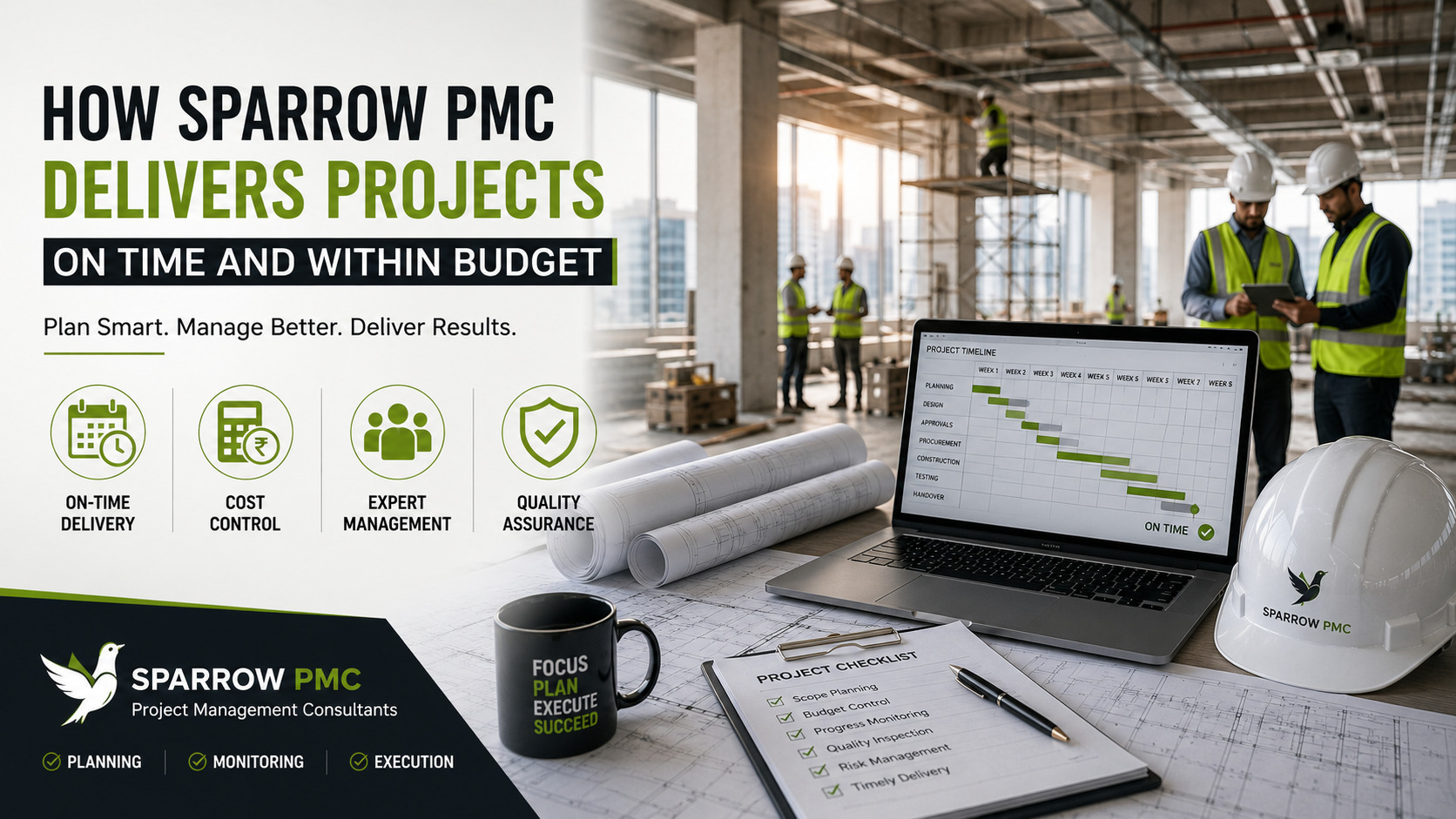
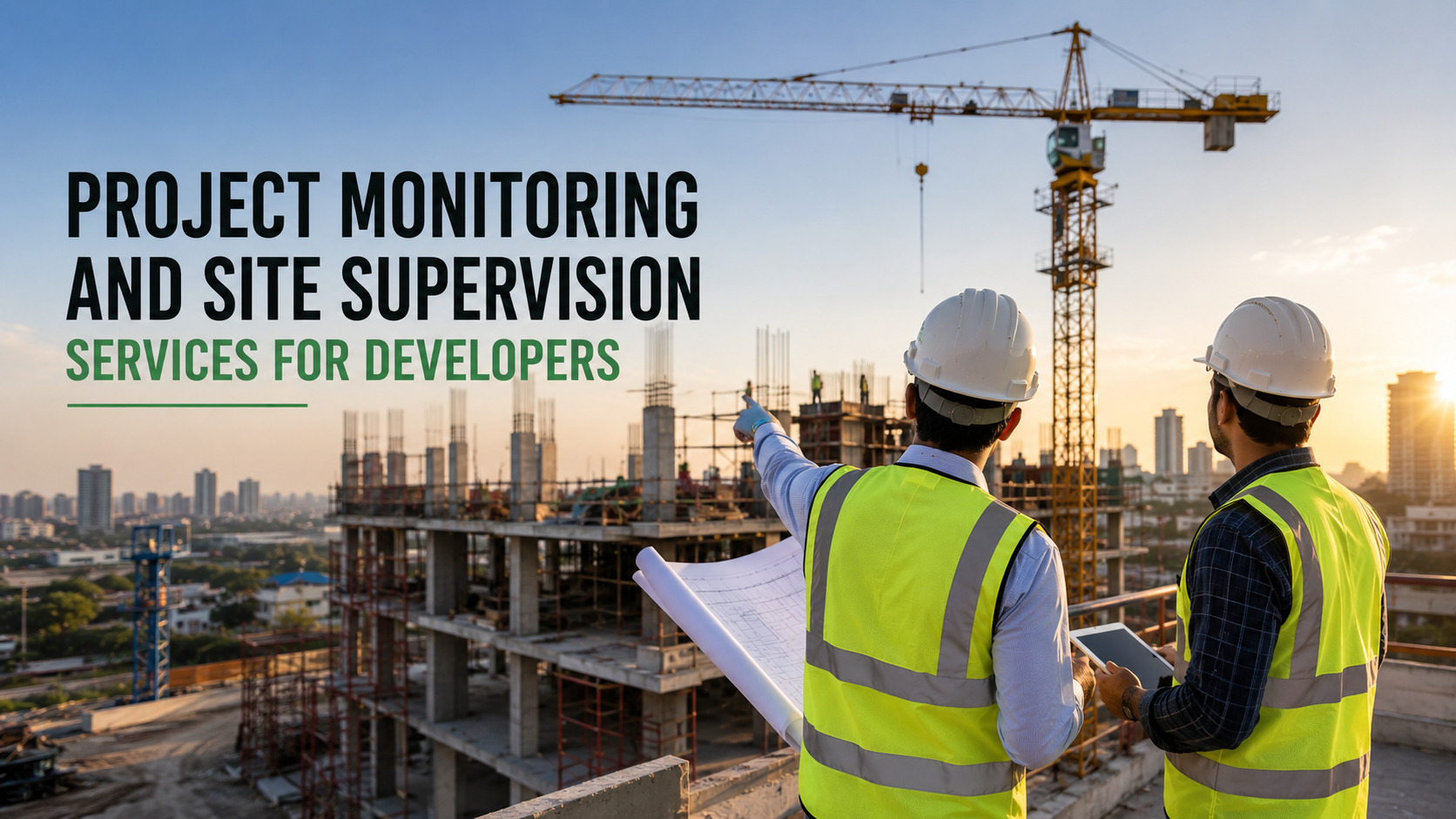
Developers manage projects where timelines, cost, quality, contractor performance, approvals, safety, and handover directly affect profitability and reputation. Whether the project is a commercial building, retail space, office development, villa project, residential project, mixed-use property, or interior fit-out, strong site control is essential.
A project may have good drawings, capable contractors, and approved budgets, but without proper monitoring and supervision, execution can still face delays, rework, quality issues, cost overruns, and poor coordination.
This is why project monitoring and site supervision services for developers are important. These services provide structured oversight of construction progress, contractor performance, quality standards, site risks, and project reporting.
Quick Answer
Project monitoring and site supervision services help developers track project progress, monitor contractors, verify quality, review timelines, identify risks, check materials, report site status, coordinate stakeholders, review bills, manage snags, and support final handover. The goal is to ensure the project is executed as per approved drawings, budget, schedule, specifications, and developer expectations.
What Is Project Monitoring?
Project monitoring is the process of tracking the complete project against the approved plan.
It includes:
- Schedule monitoring
- Progress tracking
- Contractor performance review
- Budget and cost tracking
- Risk identification
- Delay reporting
- Procurement tracking
- Approval tracking
- Quality observation
- Reporting to management
Project monitoring gives developers clear visibility of what is happening on site and whether the project is moving as planned.
What Is Site Supervision?
Site supervision is the on-ground monitoring of construction and fit-out activities.
It includes:
- Checking daily site work
- Reviewing workmanship
- Coordinating contractors
- Checking material quality
- Ensuring drawing compliance
- Monitoring labour deployment
- Identifying site issues
- Tracking safety observations
- Reviewing work sequence
- Supporting inspections and handover
Site supervision ensures that actual execution matches the approved drawings, specifications, and quality expectations.
Why Developers Need Project Monitoring and Site Supervision
Developers often handle multiple stakeholders and high-value investments. A small delay or quality issue can affect sales, leasing, handover, customer satisfaction, and cash flow.
Professional monitoring and supervision help developers avoid:
- Delayed construction progress
- Poor contractor coordination
- Weak workmanship
- Material wastage
- Cost escalation
- Billing disputes
- Rework
- Site safety issues
- MEP coordination failures
- Incomplete reporting
- Poor handover quality
For developers, monitoring is not only about knowing project status. It is about protecting project value.
Key Benefits for Developers
1. Better Timeline Control
A structured monitoring system tracks planned vs actual progress.
This helps identify:
- Delayed activities
- Slow contractor performance
- Pending approvals
- Material delays
- Labour shortages
- Critical path risks
Early identification allows developers to take corrective action before delays affect possession, leasing, launch, or handover commitments.
2. Improved Quality Control
Site supervision helps ensure that work is completed as per approved quality standards.
Quality checks may include:
- Civil work quality
- RCC and masonry checks
- Waterproofing
- Flooring
- Ceiling
- Wall finish
- Paint quality
- Electrical works
- Plumbing works
- HVAC coordination
- Fire safety systems
- Facade works
- Interior fit-out
- Final finishing
Regular checks reduce rework and improve the final project outcome.
3. Contractor Accountability
Developers often depend on multiple contractors and subcontractors. Without proper tracking, accountability becomes weak.
Project monitoring helps track:
- Contractor scope
- Work progress
- Labour deployment
- Material availability
- Delay reasons
- Quality issues
- Pending corrections
- Billing status
This creates better discipline and reduces dependency on verbal updates.
4. Cost and Billing Control
Project cost can increase when quantities, extra items, and contractor claims are not monitored properly.
Monitoring support may include:
- BOQ review
- Quantity tracking
- Running bill checks
- Extra item review
- Variation tracking
- Work completion verification
- Final bill support
This helps developers maintain better control over project expenditure.
5. Better Management Reporting
Senior management needs clear and accurate project updates.
A professional reporting system may include:
- Site progress summary
- Planned vs actual status
- Delay tracker
- Risk register
- Pending decision list
- Contractor performance update
- Material status
- Quality observations
- Photographic evidence
- Next action plan
This allows faster decision-making and better project governance.
6. Reduced Rework and Delay
Many site issues happen because drawings, services, and vendors are not properly coordinated.
Supervision helps identify problems such as:
- MEP clashes
- Drawing mismatch
- Poor workmanship
- Wrong material use
- Work sequence errors
- Incomplete scope
- Pending approvals
Correcting issues early is usually cheaper and faster than fixing them at the final stage.
Scope of Project Monitoring and Site Supervision Services
Pre-Execution Review
Before site work begins, the project should be checked for execution readiness.
This includes:
- Reviewing approved drawings
- Checking BOQ and scope
- Reviewing project schedule
- Identifying long-lead materials
- Checking contractor mobilization plan
- Understanding approval requirements
- Preparing reporting format
- Setting quality checklist
- Defining responsibility matrix
This stage creates clarity before execution starts.
Daily or Weekly Site Monitoring
Depending on project scale, monitoring may be daily, weekly, or milestone-based.
Site monitoring includes:
- Physical site inspection
- Progress review
- Work sequence review
- Contractor coordination
- Labour and resource tracking
- Material availability check
- Issue identification
- Delay observation
- Site photographs
- Progress report submission
This gives developers real-time control over execution.
Quality Inspection
Quality inspection should happen during execution, not only at handover.
Inspection may cover:
- Material verification
- Workmanship review
- Measurement checks
- Drawing compliance
- Finishing quality
- MEP coordination
- Testing requirements
- Snag identification
- Rectification tracking
A structured quality checklist helps maintain consistency across the project.
Contractor and Vendor Coordination
Project monitoring teams coordinate with:
- Civil contractors
- Interior contractors
- Electrical vendors
- Plumbing vendors
- HVAC teams
- Fire safety vendors
- Facade contractors
- Furniture vendors
- Landscape contractors
- Security and automation teams
- Cleaning and handover teams
Proper coordination keeps work moving in the correct sequence.
Schedule Monitoring
Schedule monitoring tracks whether the project is moving as per approved timeline.
It includes:
- Master schedule review
- Milestone tracking
- Critical activity tracking
- Delay analysis
- Recovery planning
- Dependency tracking
- Weekly progress review
- Completion forecast
This helps developers manage commitments to investors, tenants, buyers, and internal teams.
Risk Management
Every project has risks. The purpose of monitoring is to identify risks early.
Common risks include:
- Contractor delay
- Material delay
- Drawing delay
- Design change
- Site condition issue
- Approval delay
- Cost variation
- Quality defect
- Safety concern
- Labour shortage
A risk tracker helps developers prioritize action before the risk affects the project outcome.
Snagging and Handover Support
Before handover, all pending issues should be tracked and closed.
Handover support includes:
- Snag list preparation
- Snag closure tracking
- Final quality inspection
- Testing and commissioning support
- Cleaning check
- Documentation review
- Handover report
- Completion status update
This helps ensure the project is ready for actual use, occupancy, leasing, or operations.
Types of Projects That Need Monitoring and Supervision
Project monitoring and site supervision services are useful for:
- Commercial buildings
- Retail stores
- Offices
- Restaurants and F&B outlets
- Luxury villas
- Residential projects
- Mixed-use developments
- Showrooms
- Salons and spas
- Warehouses
- Industrial fit-outs
- Franchise outlets
- Multi-location rollouts
- Renovation projects
The level of monitoring can be customized based on project size, complexity, and risk.
Difference Between Project Monitoring and Full PMC
Project monitoring is usually focused on tracking progress, quality, risks, and reporting. Full PMC includes broader project management from planning to handover.
| Service Area | Project Monitoring | Full PMC |
|---|---|---|
| Progress tracking | Yes | Yes |
| Site supervision | Yes | Yes |
| Quality inspection | Yes | Yes |
| Contractor coordination | Limited to monitoring scope | Full coordination |
| BOQ review | Optional | Yes |
| Vendor selection support | Usually limited | Yes |
| Cost control | Limited or periodic | Detailed |
| Schedule management | Yes | Yes |
| Change management | Optional | Yes |
| Billing verification | Optional | Yes |
| Handover support | Yes | Yes |
Developers can choose either monitoring-only support or full PMC depending on project requirement.
Common Mistakes Developers Should Avoid
Depending Only on Contractor Updates
Contractor updates may not always show the complete project risk. Independent monitoring gives better visibility.
Starting Without a Clear Schedule
Without a baseline schedule, delays cannot be measured properly.
Ignoring Quality Checks During Execution
Quality should be checked continuously, not only during final handover.
Not Tracking Extra Work
Untracked extra work can create billing disputes and cost escalation.
Delaying Material Decisions
Late material selection affects procurement, installation, and project completion.
Weak Documentation
Poor reporting, missing approvals, unclear instructions, and verbal decisions can create disputes later.
No Snag Closure System
Final-stage snagging without tracking can delay handover and affect client satisfaction.
Project Monitoring Checklist for Developers
Before starting monitoring, developers should confirm:
- Approved drawings are available
- BOQ and scope are clear
- Project schedule is approved
- Contractor responsibilities are defined
- Reporting format is finalized
- Quality checklist is prepared
- Site inspection frequency is agreed
- Risk tracker is active
- Material tracker is maintained
- Delay reporting process is clear
- Billing review process is defined
- Snag closure method is agreed
- Handover documentation requirements are listed
This checklist helps create a controlled monitoring system.
How Sparrow PMC Supports Developers
Sparrow PMC provides project monitoring, site supervision, and project management consultancy services for commercial, retail, office, restaurant, F&B, salon, spa, residential, and luxury villa projects.
For developers, Sparrow PMC supports:
- Site progress monitoring
- Contractor coordination
- Quality inspections
- Timeline tracking
- Risk reporting
- Material tracking
- BOQ and cost review
- Billing verification
- Snag closure
- Handover support
- Management reporting
Sparrow PMC helps developers maintain better control over site execution, contractor performance, project quality, and final delivery.
FAQs
What are project monitoring services?
Project monitoring services track the progress, quality, cost, risks, contractor performance, and schedule of a construction or fit-out project. They help developers understand whether the project is moving as planned.
What is included in site supervision?
Site supervision includes checking daily work, monitoring contractors, reviewing material quality, ensuring drawing compliance, identifying defects, tracking progress, and reporting site issues.
Why do developers need site supervision?
Developers need site supervision to ensure contractors execute work properly, maintain quality, follow approved drawings, avoid delays, and close snags before handover.
Is project monitoring different from PMC?
Yes. Project monitoring focuses mainly on tracking and reporting progress, quality, and risks. Full PMC includes broader services such as planning, BOQ review, vendor coordination, cost control, change management, billing verification, and handover.
How often should site monitoring be done?
The frequency depends on project size and risk. High-speed or complex projects may need daily monitoring, while smaller projects may need weekly or milestone-based inspections.
Can site supervision reduce project cost?
Yes. Good supervision can reduce rework, material wastage, quality defects, billing disputes, and delay-related costs.
When should developers appoint a monitoring team?
Developers should appoint a monitoring team before major execution begins. Early involvement helps establish schedule, reporting, quality checks, risk tracking, and contractor accountability.
Conclusion
Project monitoring and site supervision services help developers manage construction and fit-out projects with better control over time, cost, quality, contractors, risks, and handover.
For developers, strong monitoring is not just a reporting activity. It is a project governance tool that protects investment, improves execution discipline, reduces rework, and supports timely delivery.
Whether the project is commercial, residential, retail, office, restaurant, luxury villa, or mixed-use, professional monitoring and supervision can make project execution more predictable and accountable.
Looking for Project Monitoring Support?
Sparrow PMC provides project monitoring, site supervision, and project management consultancy services for developers, brands, business owners, and commercial project teams.
Contact Sparrow PMC for site supervision, progress tracking, quality inspection, contractor coordination, cost review, snag closure, and handover support.